With the rise of AI-generated answers from tools like Google’s AI Overview, AI Mode, and ChatGPT, more users are finding what they need directly within these platforms. This trend is shifting how e-commerce visibility works, making Answer Engine Optimization a crucial layer on top of traditional SEO strategies.
According to Similarweb’s 2025 Generative AI Landscape report, generative AI platforms now drive over two billion referrals to transactional sites each month. Brands that move early benefit from a clear early adopter advantage, securing top visibility before AI surfaces become saturated with competitors or monetized placements.
Google’s newly announced Universal Content Protocol (UCP) is also accelerating this shift, offering retailers a standardized way to feed structured product data into AI systems, and early integration supports long-term discoverability.
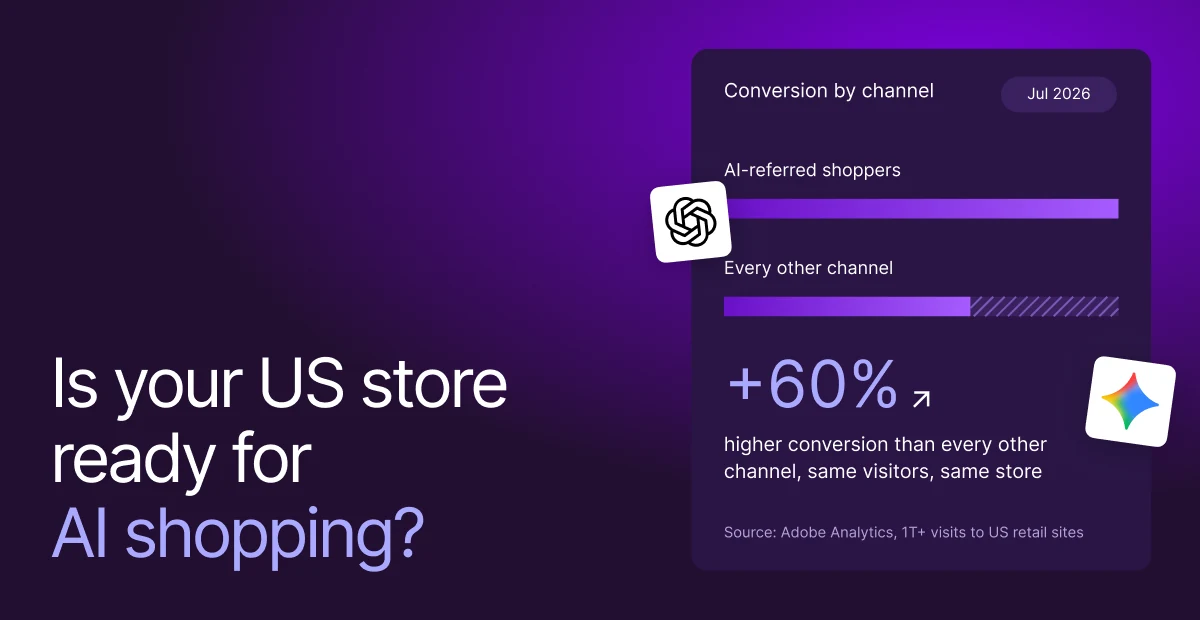
What makes this traffic different is its intent. It doesn’t mirror traditional SEO clicks. AI-assisted users are more direct, asking specific questions and expecting immediate answers. That means the traffic AI generates is often more focused, more qualified, and better aligned with purchase decisions, more about which we talk further on in this article.
What Is AEO and Why Is It Different From SEO?
Answer Engine Optimization (AEO) is the process of making your content more visible and trustworthy to generative AI systems that provide direct answers to users. That includes tools like ChatGPT, Google AI Overview, Google AI Mode Gemini, and voice assistants. These systems aim to deliver immediate, conversational responses rather than sending users to a list of search results. AEO helps your content become part of those answers.
Unlike traditional SEO, which focuses on ranking content within the top positions on search engine results pages (SERPs), AEO is about being included in AI-generated answers. That inclusion happens in two ways: the generative response (what the AI says) and the citation list (the sources it references). Both of these can boost brand awareness and drive traffic and conversions.
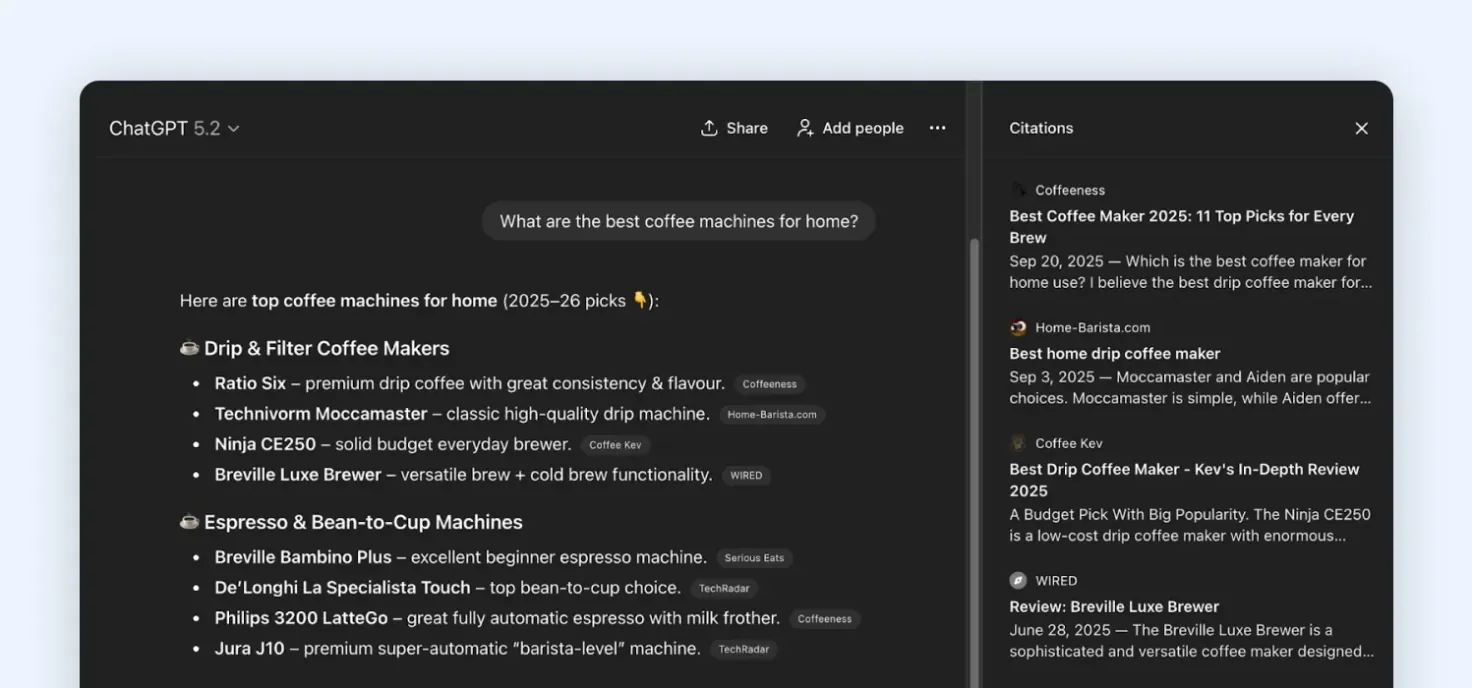
Results for a search of “the best coffee machine”, with the generative response on the left and the citation list on the right.
To succeed at AEO, you need to structure and optimize your content specifically for how AI systems process information. That requires slightly different tactics and success metrics than traditional SEO.
To help understand the key differences between AEO and SEO, here’s a breakdown of how they compare:
| Feature | SEO | AEO |
|---|---|---|
| Goal | Rank pages | Get cited in AI answers |
| Search behavior | Text-based, keyword-driven | Voice/conversational, intent-driven |
| Content format | Long-form, keyword-focused | Snippets, direct answers, FAQs |
| Devices used | Desktop, mobile browsers | Chatbots, voice assistants, AI search |
| Success metrics | Click-throughs, sessions | Citations, visibility, assisted conversions. Purchases are much more likely to occur from AEO traffic, so AEO can outperform SEO, even with less traffic. |
This isn’t just theory. As stated in HubSpot’s Consumer Trends Report, 72% of users say they will use AI-powered search more often. This aligns with Shopify’s research, which points to AI being responsible for a growing slice of discovery, suggesting a long-term shift in where consumer attention begins.
How the Rise of AEO Is Reshaping E-commerce
This shift is reshaping how people discover and evaluate products. Traditional SEO strategies alone are no longer enough to capture attention in a world where AI-generated summaries often replace browsing. Buyers rely on quick, conversational answers that summarize options, highlight pros and cons, and recommend brands more and more.
Statista found that around 1 in 5 Americans reported using AI platforms to search for products, showing that shoppers are already relying on AI to research and evaluate e‑commerce offerings. This means that brands that only optimize for SEO are being left out of the conversation. Your product might be the best in its category, but if AI doesn’t cite your content, it’s invisible to shoppers making decisions in these new environments.
Why Does AEO Perform Well for E-commerce
E-commerce buyers usually have one goal in mind: quickly find the right product and be sure in their decision. Now, with tools like Google’s AI Overview, they don’t even need to visit your site at all, as product names and links are directly included in the AI-generated summaries.
Shoppers using AI tools often ask pointed, high-intent questions like “What is the best vitamin C serum?” AEO gets your brand in front of these questions, right when the buyer is deciding. And with Google’s UCP, buyers can even complete the purchase directly within AI interfaces like Google AI Mode, without needing to visit your site at all. This further compresses the funnel, making visibility in AI summaries more valuable than ever. That’s the moment that drives conversions.
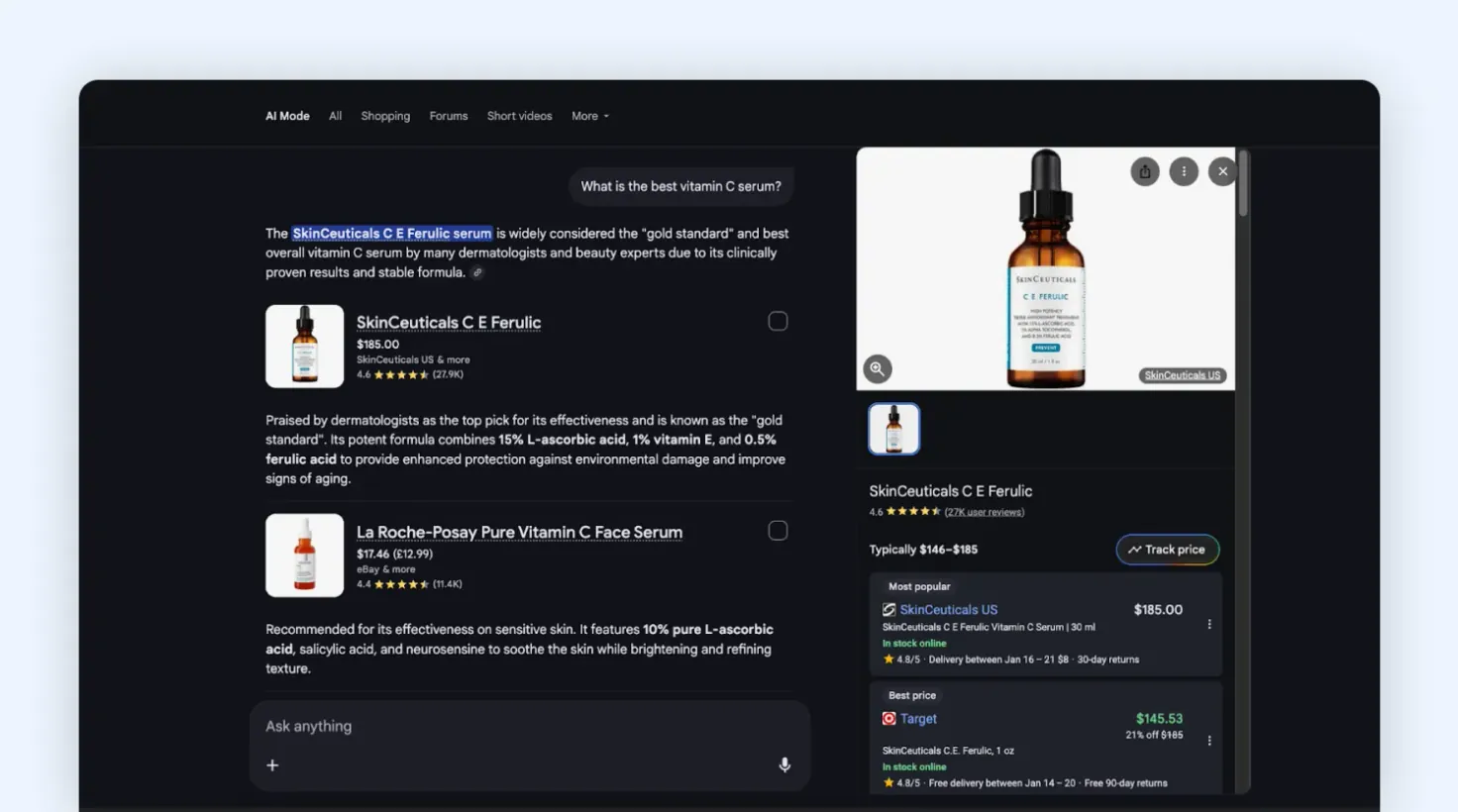
Google AI Mode listing specific products directly as an answer to the search query.
Benefits of AEO for Online Stores
Here’s how AEO provides an edge for modern e-commerce brands:
- Higher Conversion Rates: AI visitors tend to ask specific, purchase-ready questions. Already back in the summer of 2025, Ahrefs reported that the conversion rate from visitors coming from AI Search was 23x higher than what they received from traditional organic search.
- Better Lead Quality: Leads from AI engines arrive with deeper context. They’ve already been exposed to product categories, comparisons, and decision criteria.
- Brand Control: When your site is cited by AI, you shape the message. This keeps outdated or incorrect third-party content from hijacking your narrative.
Magebit’s AEO Expertise in Action
Magebit doesn’t treat AEO as a buzzword. We’ve embedded it into our processes for performance-driven clients. From site structure to metadata to content writing, our AEO strategies are woven into the full e-commerce journey.
We’re also at the forefront of technological implementation, offering a ready-to-use extension for Agentic Commerce Protocol (ACP) and, soon to come, UCP. This enables merchants to make the most out of AEO opportunities and secure an early mover advantage in the evolving AI commerce ecosystem.
We’ve adapted our playbook to account for:
- How AI parses structured data
- The way it prioritizes fast, direct answers
- The intent-driven nature of the searches
How to Optimize for AEO in E-commerce
The foundation of AEO success lies in how you present answers. AI doesn’t “read” your site like a human, but rather looks at structure, clarity, and relevance. Here are just some of the tactics Magebit uses to help clients become AEO-ready, and that you can apply as well:
1. Write Answer-First Content
AI tools scan for fast, complete responses that solve a query instantly, and your job is to make it simple for AI to do so. If you bury your answer in the middle of a large paragraph, it might skip you entirely. Start with a direct answer and follow up with support details. This keeps both machines and users engaged.
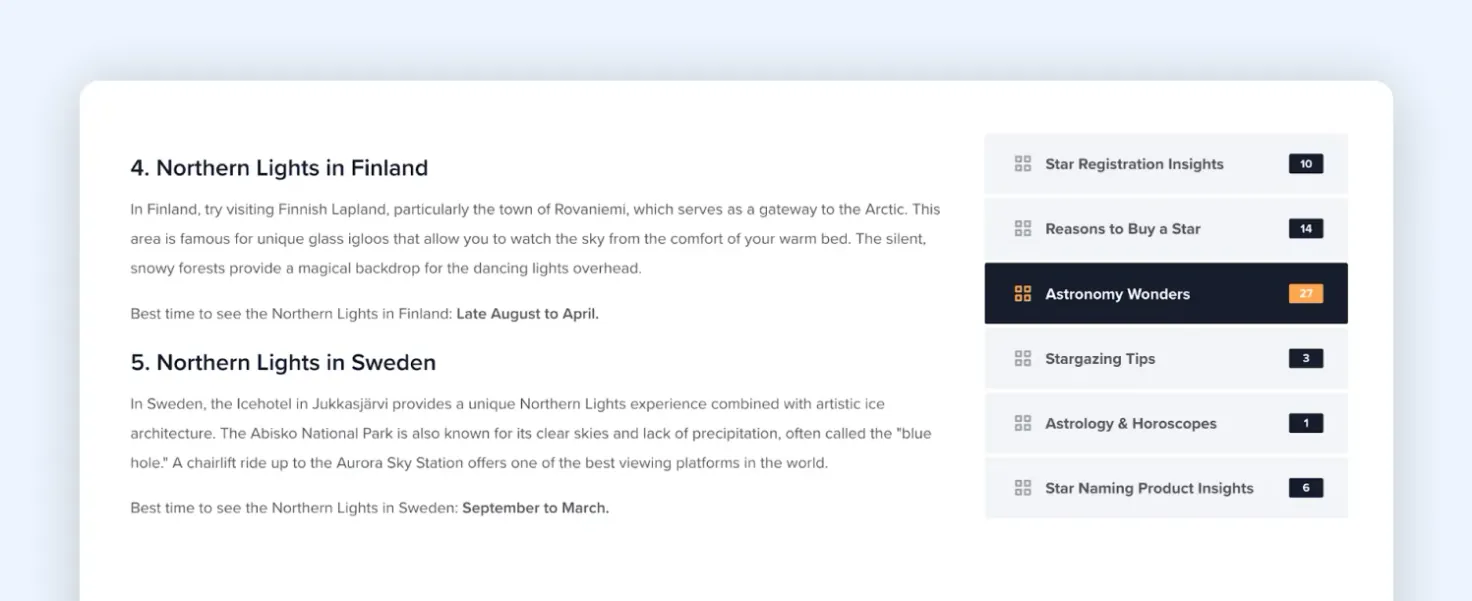
An excerpt of a guide titled “Where to See the Northern Lights” by Label Stars, consisting of short, direct paragraphs, from which it is easy to extract information.
2. Use Schema Markup
Schema helps search engines and AI understand your content’s purpose. It turns messy web pages into structured data that can be ranked and cited. Focus on high-value schemas that improve AEO performance. Some of the most effective are:
- FAQPage: For clearly structured question-answer blocks.
- Product: Name, brand, reviews, pricing.
- LocalBusiness: If location-specific data applies.
3. Submit a Google Merchant Product Feed
Help Google understand what products are available on your site by submitting a product feed through Google Merchant Center. This gives AI systems structured access to your inventory and ensures products are indexed and discoverable.
4. Add FAQs to Key Pages
AI tools love structured question-and-answer formats, and so do users. This combo makes FAQs one of the most effective AEO formats that shouldn’t be reserved solely for dedicated question-and-answer pages. Add these to:
- Product pages (e.g., “Does this come with a warranty?”)
- Category pages (e.g., “How do I choose the right type?”)
- Blog posts (e.g., “What’s the shelf life of this ingredient?”)
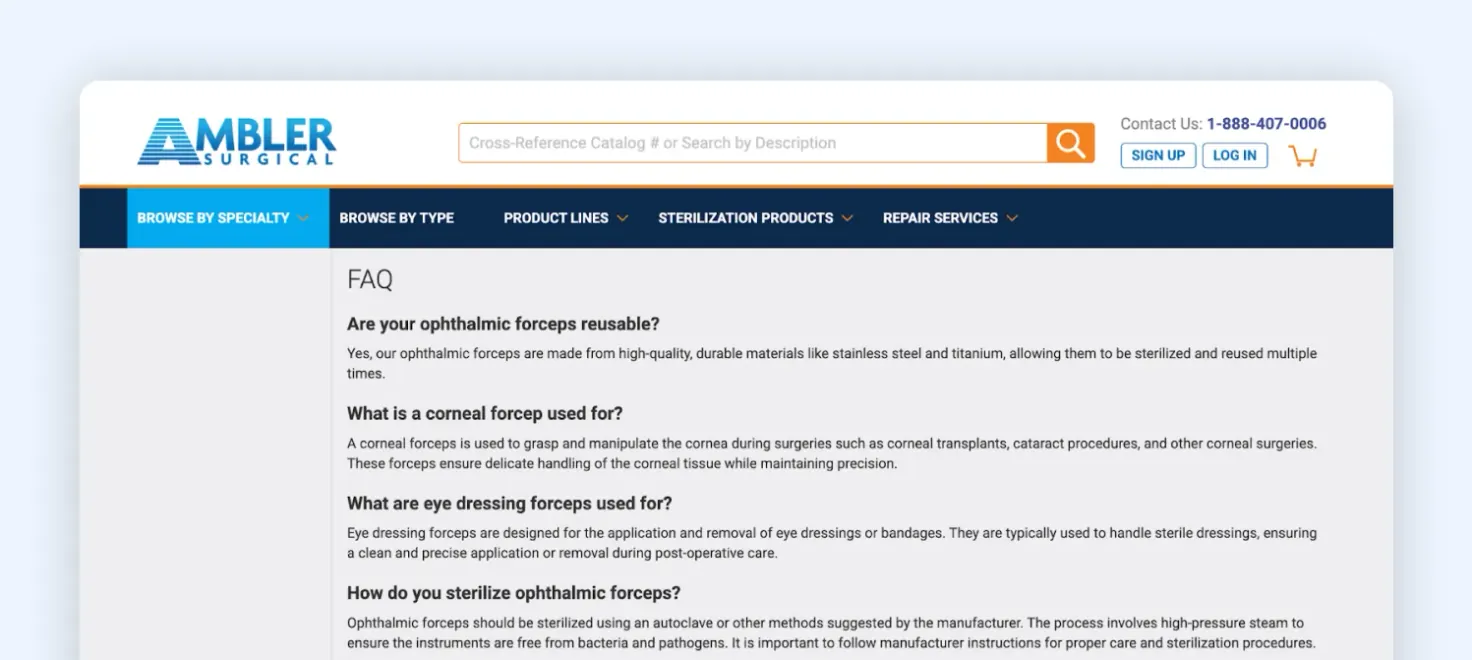
Ambler Surgical, adding an FAQ section to their category pages.
5. Be Consistent Across the Web
AI compares information from multiple sources. If your pricing, product information, or claims are inconsistent, you look less trustworthy, therefore, less citeable. Align your product data across:
- Your own site
- Marketplaces
- Social media
- News coverage or press releases
6. LLM Seeding (Large Language Model Seeding)
AI models pull data from trusted sources. Find out which sites and publications are frequently cited in your field and explore ways to be featured. Some possible options include:
- Publish detailed product comparisons aimed at solving specific buyer problems
- Contribute to expert roundups or industry research
- Get backlinks from reputable media sources or blogs likely used by LLMs
7. Use TL;DR Summaries to Help AI Find You
A short TL;DR (Too Long; Didn’t Read) summary at the start of a page makes it easier for AI engines to understand and surface your content. These brief intros should include the key answer, product highlights, and relevant keywords all in one place.
They’re especially powerful on blog posts, product guides, and landing pages. You’re giving AI the snippet it needs without forcing it to examine a full page.
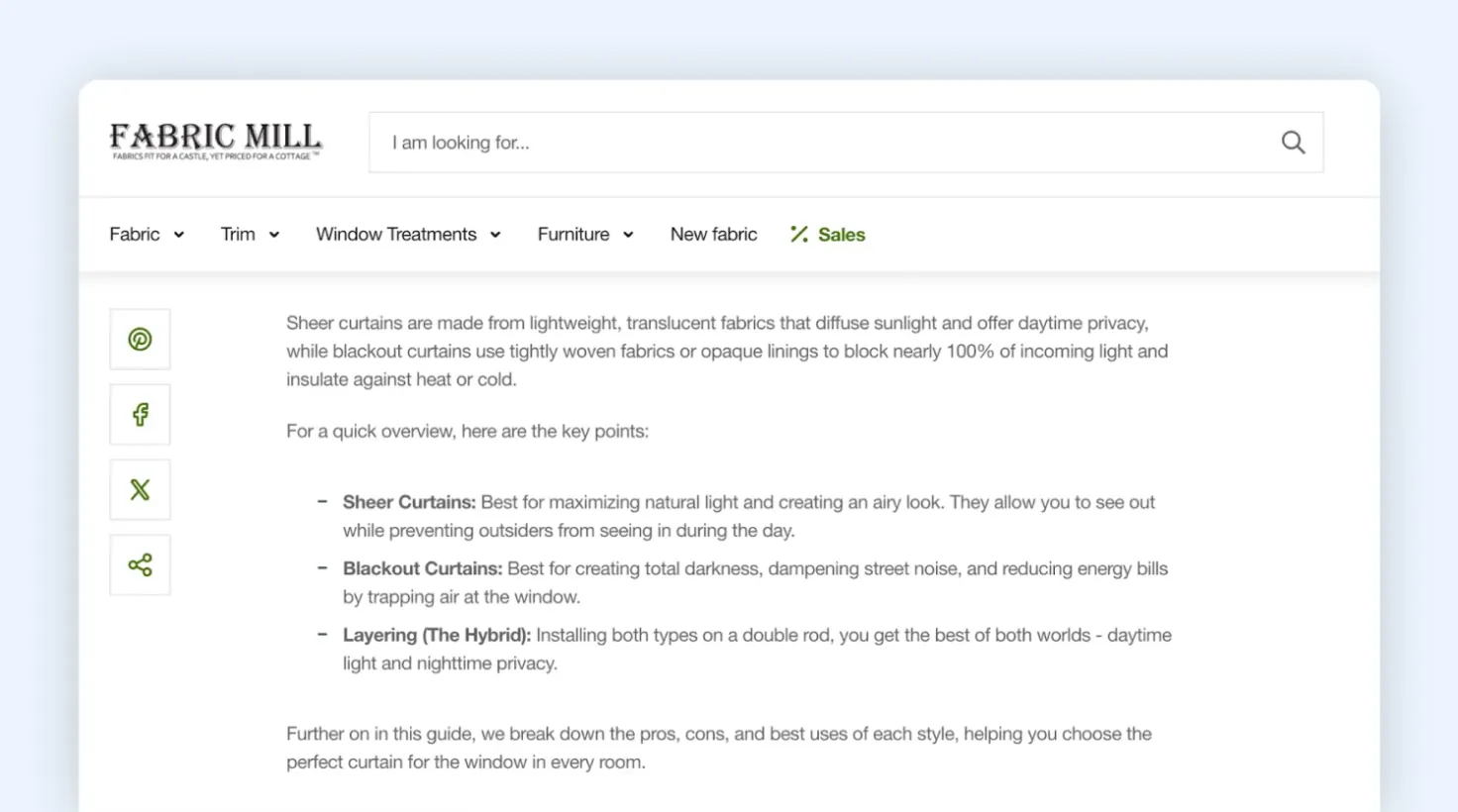
A TL;DR introduction for a blog post titled “Sheer vs. Blackout Drapes: Which is Right for Your Home?” on The Fabric Mill, starting with a definition of both and a short overview of the whole blog.
8. Use ACP and UCP/AP2 Modules When Needed
Some platforms, like Shopify, support UCP and agentic commerce out of the box. But for others like Magento/Adobe Commerce, BigCommerce, or Salesforce, manual integration is needed. Magebit offers integration support for platforms that don’t natively support these protocols, helping you get AEO-ready faster.
9. Track Citations and Conversions
Filter traffic sources to monitor referrals from AI domains like chat.openai.com. To go beyond traffic, track citation frequency, and prompt-level visibility. This helps you understand where your brand is being mentioned and how often. You can do this manually or with tools like Semrush, Ahrefs, and SE Ranking.
Key things to measure:
- Which URLs get cited in AI answers
- Whether citations include clickable links
- Sentiment and brand positioning in AI summaries
- Competitor mentions in the same prompt
Start with your top 10–20 converting URLs. Build a tracking spreadsheet to monitor changes weekly. With the right system, you can directly tie AEO exposure to on-site engagement and revenue.
What E-commerce Teams Should Do Next
Focusing on AEO doesn’t mean that you need to rebuild everything. Just reframe how your site answers questions and how it shows up in the new AI landscape.
- Start small. Pick 10 high-value URLs and rewrite them with an answer-first structure.
- Layer in the schema. Prioritize FAQ and Product markup.
- Monitor prompt coverage. Use tools to check if your brand appears in citations or generative answers.
- Align messaging. Ensure product facts are consistent on all platforms.
- Reach out. Such e-commerce agencies as Magebit can guide your AEO rollout without disrupting your SEO momentum.
Final Thoughts
AI-powered discovery is changing how people shop. If your brand isn’t being mentioned by AI tools, you’re losing tons of potential customers. AEO is how brands stay relevant in 2026.
At Magebit, we specialize in building visibility strategies that work across both search and AI discovery. Whether you’re already running strong SEO campaigns or just getting started, we help you integrate AEO without losing momentum. Our dual approach ensures you’re showing up everywhere it counts - in search results, AI overviews, and conversations.
Want to know how your brand stacks up in AI visibility? Reach out to our AEO experts today, and let’s make sure your hard work gets noticed not only by search engines but also by AI. If you’re using Adobe Commerce or Magento, you might also be interested in our guide on how to Sell on ChatGPT: The Magento Merchant’s Guide, where we explain how to tap into OpenAI’s Instant Checkout feature.