

Large ecommerce platforms are built to handle thousands of scenarios, but the reality of international commerce is that edge cases still emerge, often only when multiple legitimate features intersect.
During a recent implementation on Shopify, Magebit encountered exactly such a scenario. What initially appeared to be a minor discrepancy in tax calculations ultimately revealed a deeper issue within Shopify’s tax engine.
After investigating the issue and escalating it through Shopify’s partner channels, it was confirmed as a platform bug and later fixed within Shopify’s core system. While the problem surfaced during one project, the fix ultimately improved how Shopify handles similar tax scenarios across stores.
Situations like this highlight something many teams only discover during real implementations: complex ecommerce setups can expose edge cases that aren’t visible in standard configurations. That’s where working with an experienced partner makes a difference. While platform-level fixes can often take months on third-party-managed systems, this issue was resolved in under two weeks, a testament to Magebit’s close collaboration with Shopify.
The context: zero-rated products in a mixed-tax order
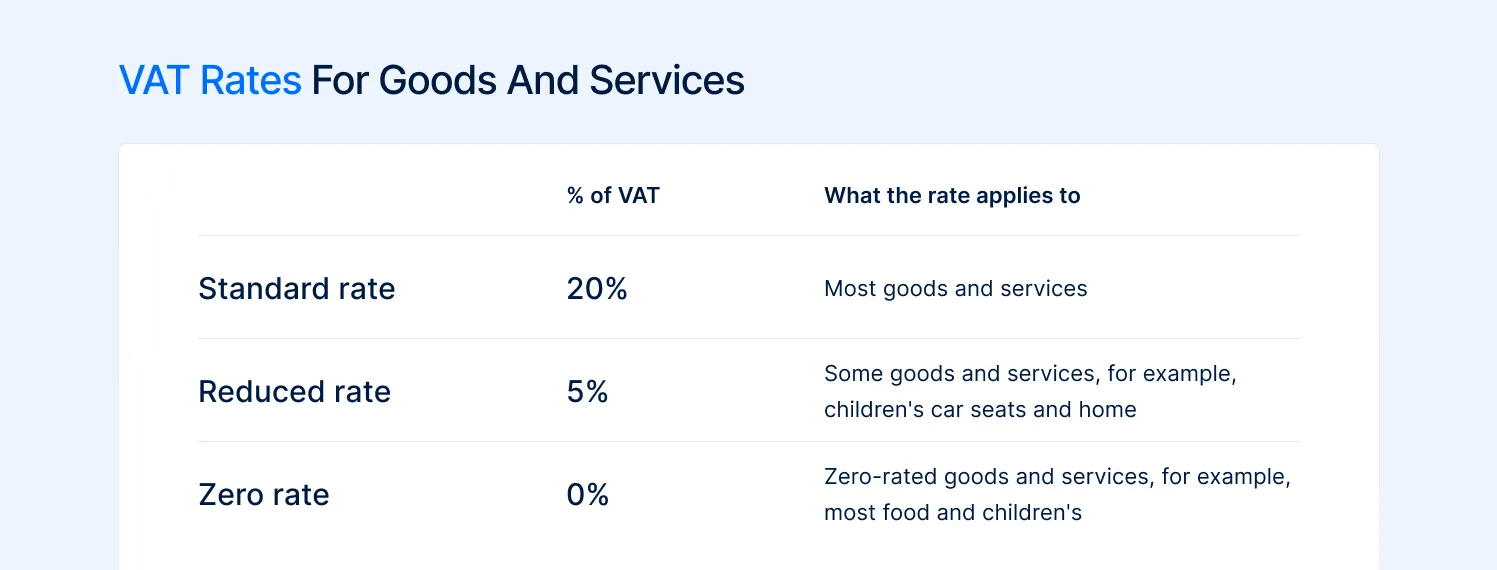
The merchant involved in this project sells baby clothing alongside other product categories. In the United Kingdom, baby clothing is zero-rated for VAT, meaning these items carry a tax rate of 0%, while other products in the same order may still be taxed at the standard rate.
This creates a technically nuanced scenario where orders frequently contain a mix of taxable and non-taxable items. To ensure accurate tax attribution, Shopify distributes tax proportionally when bundled products contain items with different tax treatments. The calculation is based on each item’s share of the bundle price excluding tax, allowing the system to assign the correct amount of tax to each component.
Shipping must follow the same principle. If an order contains both taxable and zero-rated goods, the shipping charge should also be divided proportionally so that VAT is applied only to the portion associated with taxable products. Under normal circumstances, this behavior is handled automatically by Shopify’s tax engine.
Where the logic broke down
During quality assurance and cross-market testing, Magebit’s engineers noticed that this proportional logic changed under certain circumstances.
When the order remained within the UK market, tax calculations behaved exactly as expected. However, once the customer’s order country switched to another market, the calculated ratios began to diverge from the expected outcome.
Specifically:
- Shipping tax no longer reflected the correct relationship between taxable and zero-rated products
- Order totals changed unexpectedly when the customer’s market changed
- VAT calculations no longer aligned with the intended proportional logic
Because the store’s tax configuration and product categorization were correct, the discrepancy pointed to behavior originating beyond the store implementation itself.
A simple example of the logic failure
To illustrate the issue, consider a simplified order scenario.
Example order:
£50 taxable items
£50 zero-rated baby clothing
£10 shipping
Because only 50% of the order value is taxable, shipping tax should follow the same proportional logic.
Expected behavior:
Taxable shipping portion: £5
VAT (20%): £1.00
Observed behavior during testing:
VAT applied to the full £10 shipping
VAT charged: £2.00
In other words, once the customer’s market changed outside the UK, the proportional tax distribution stopped applying correctly to shipping.
While the difference appears small in a simplified example, the impact can become significant at scale, particularly for merchants processing large order volumes across multiple markets.
Diagnosing the source of the issue
At this stage, Magebit’s engineering team shifted the investigation from store configuration review to platform behavior analysis.
Multiple test scenarios were created to isolate the precise conditions that triggered the discrepancy. This included testing different bundle combinations, analyzing shipping calculations, and observing how results changed when the customer’s market varied.
Once the behavior was reproduced consistently, the conclusion became clear: the unexpected calculations were being generated by Shopify’s internal tax logic rather than by any configuration within the store.
Because the core functionality of Shopify cannot be modified externally, resolving the issue required involvement from Shopify’s engineering team.
Working with shopify through the partner channel
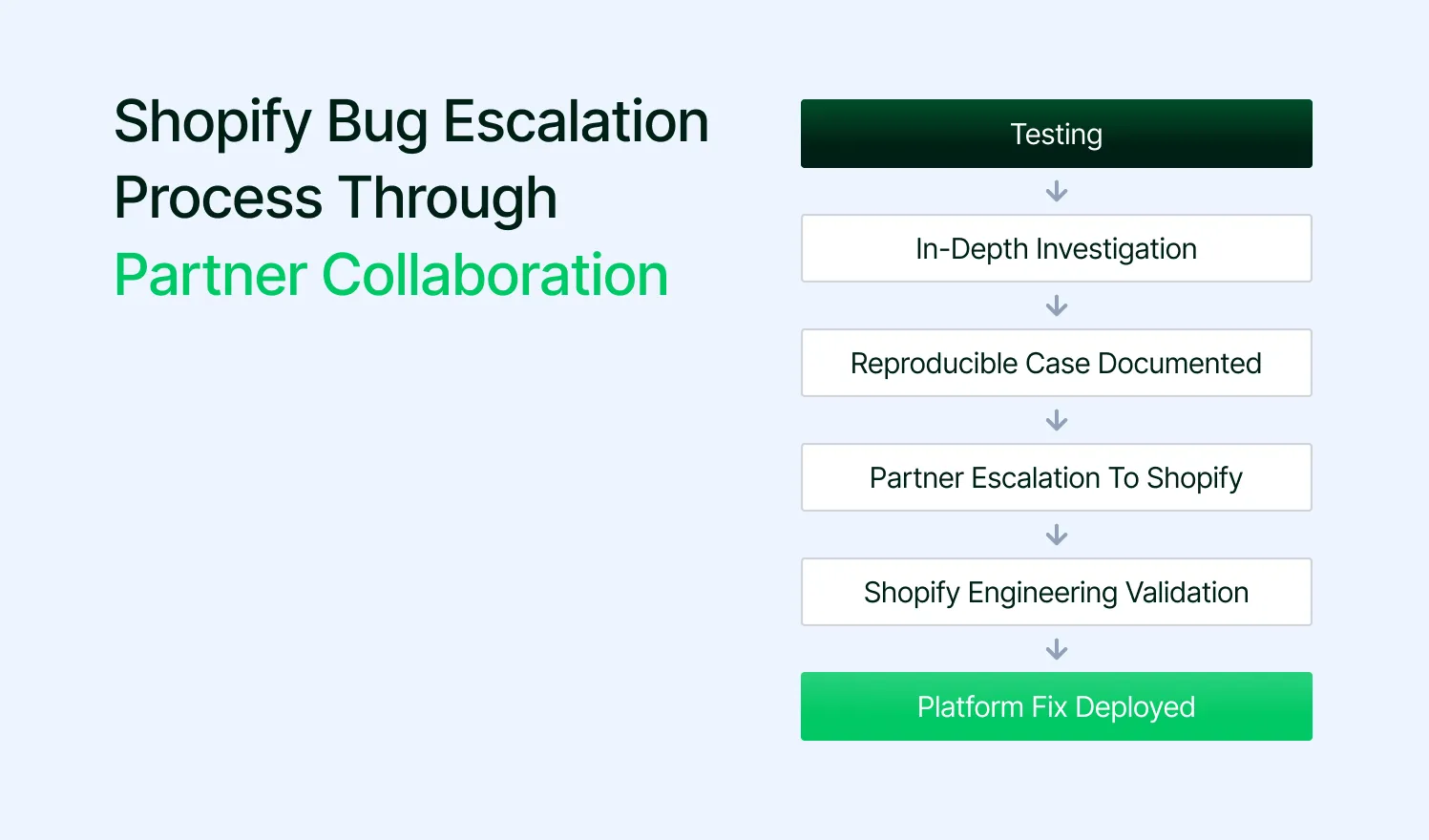
When a platform-level issue is identified, the path to resolution depends heavily on how clearly the behavior can be reproduced and communicated.
As a partner within the Shopify ecosystem, Magebit is able to escalate documented platform issues through dedicated partner support channels. These channels allow close partners like Magebit to provide technical documentation directly to Shopify’s internal teams when unexpected platform behavior is discovered during implementation, speeding up the discovery to production deployment cycle.
In this case, Magebit submitted a detailed report outlining the scenario, including reproduction steps and calculation comparisons demonstrating the discrepancy. Because the issue was clearly documented and reproducible, Shopify’s engineers were able to validate the behavior internally and begin working on a fix.
What made this even more notable was the speed of the resolution. From the moment the issue was submitted to Shopify’s team to the fix being deployed in production, the process took less than two weeks. For platform-level issues in systems managed by third parties, resolutions often take months. The turnaround highlighted how effective close collaboration between partners and the platform team can be.
From edge case to platform improvement
This wasn’t a theoretical issue discovered in isolation. The discrepancy surfaced during the final testing phase of an international storefront preparing for launch. With the go-live date approaching, incorrect tax calculations would have meant delays or manual workarounds at checkout.
Resolving the issue quickly was therefore critical not only from a technical standpoint but also to keep the launch timeline intact. After Shopify implemented the correction, the Magebit team ran another round of validation to make sure everything behaved correctly across real order scenarios.
The update ensured that:
- Shipping tax calculations once again respected the proportional distribution between taxable and zero-rated products
- Mixed-tax bundles behaved consistently across markets
- Switching the customer’s market no longer disrupted the expected VAT treatment
Because the change was implemented at the platform level, the improvement benefits any merchant operating under similar tax structures.
Final thoughts
What initially appeared to be a store-level discrepancy turned out to be a platform-level issue within Shopify’s tax logic. Magebit’s role was to isolate the scenario, document the behavior clearly, and escalate it through the appropriate partner channels. Once validated internally, Shopify implemented a correction within the platform.
For merchants operating across multiple markets, this case demonstrates the value of working with partners who understand the platform deeply enough to identify edge cases and collaborate directly with the platform provider when they appear.
If you are building or scaling a complex Shopify store and want a team that can navigate these kinds of platform-level challenges, feel free to contact Magebit to discuss your project.


Free tips to grow your store
eCommerce related news
New articles every month
Macaroni and cheese recipes
Check your inbox for tips.