Are your emails getting delivered but not seen, even when you use standout copy and the right timing?
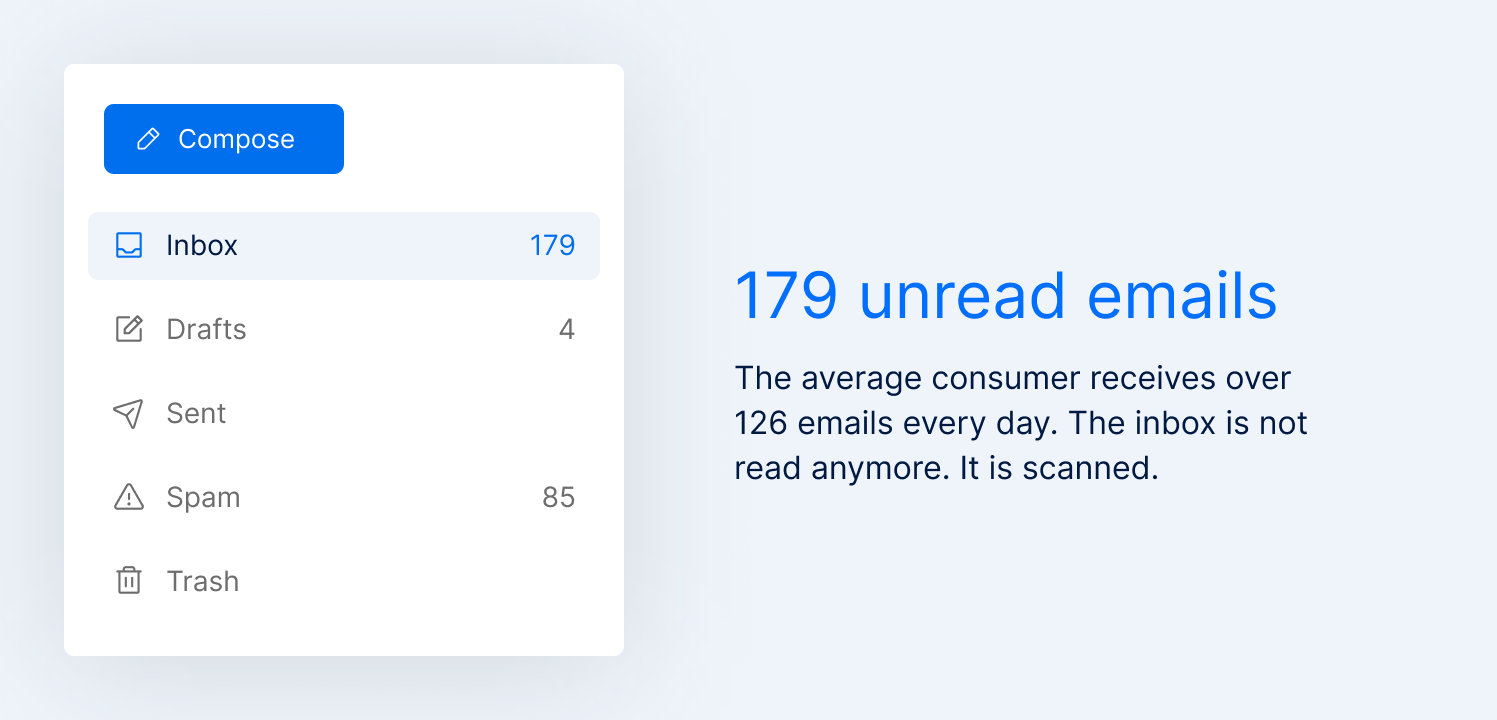
In 2026, the inbox is not read. It’s scanned. And if your brand isn’t recognized and trusted at first glance, it doesn’t matter what’s inside the email or what time you send it.
That’s where BIMI (Brand Indicators for Message Identification) and VMC (Verified Mark Certificates) change the equation.
Why do e-commerce brands now need BIMI and VMC?
You’ve probably noticed it already. Some brands stand out in the inbox immediately. Their emails feel more recognizable, more credible, and easier to trust before they’re even opened.
That’s not accidental branding. It’s the result of a larger shift happening in email. In 2026, inboxes are being shaped by two realities:
- AI-generated phishing emails are becoming harder to distinguish from legitimate brand communication
- Users are making faster decisions in increasingly crowded inboxes
That combination is changing how trust works. For years, authentication was designed mainly for inbox providers. It helped Gmail and Yahoo verify legitimacy behind the scenes, but users never saw any of it. Now that invisibility has become a weakness.
Research shows users spend only a few seconds deciding whether an email feels safe enough to engage with. Which means recognition and perceived legitimacy now influence performance before the email is even opened.
That’s why BIMI and VMC matter more than they did even three years ago. They move trust from the backend to the front of the inbox, helping brands become recognizable at the exact moment users are deciding what deserves attention.
And in a channel where over 361 billion emails are sent daily, that visibility compounds quickly.
What is BIMI and how does it influence email branding?
BIMI takes the trust you’ve built at a system level and makes it visible in the inbox. It allows brands to display their logo directly in the inbox avatar slot.
But unlike traditional avatars, which can be pulled from third-party sources, a BIMI logo is tied to your authenticated domain. It only appears if your email setup meets strict authentication standards.
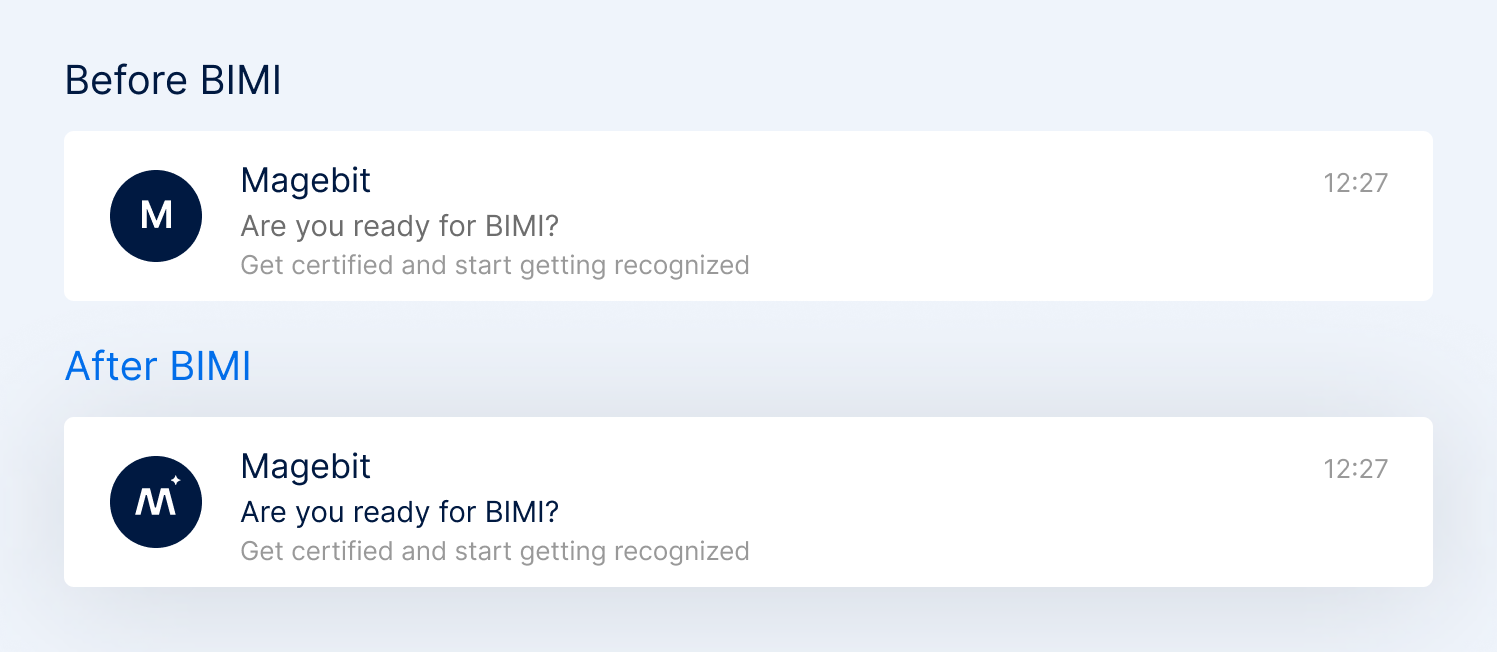
That detail is what makes BIMI powerful. It’s not just a logo. It’s a verified brand signal. And in a crowded inbox, that changes how users behave.
Instead of reading sender names line by line, users scan visually. A recognizable, verified logo gets processed instantly. It creates familiarity before the subject line is even read and reduces hesitation in that split-second decision to open.
That’s why adoption has surged, with brands increasingly using BIMI to stand out in an environment shaped by rising phishing attempts and AI-generated emails.
In a channel where 59% of consumers say email influences their purchase decisions, that early trust signal becomes a real differentiator.
What are VMC and CMC: How verification shapes brand perception
BIMI doesn’t work on its own. It relies on certificates that verify your logo, and this is where the branding strategy comes into play. There are two types: Verified Mark Certificates (VMC) and Common Mark Certificates (CMC).
A VMC is the highest level of verification. It requires a registered trademark and enables the blue checkmark in Gmail. That checkmark carries weight. It acts as an immediate trust shortcut.

A CMC, introduced more recently, removes the trademark barrier. Instead of requiring formal registration, it verifies that your logo has been in consistent public use. This makes BIMI accessible to startups and growing e-commerce brands that don’t yet have trademarks in place.
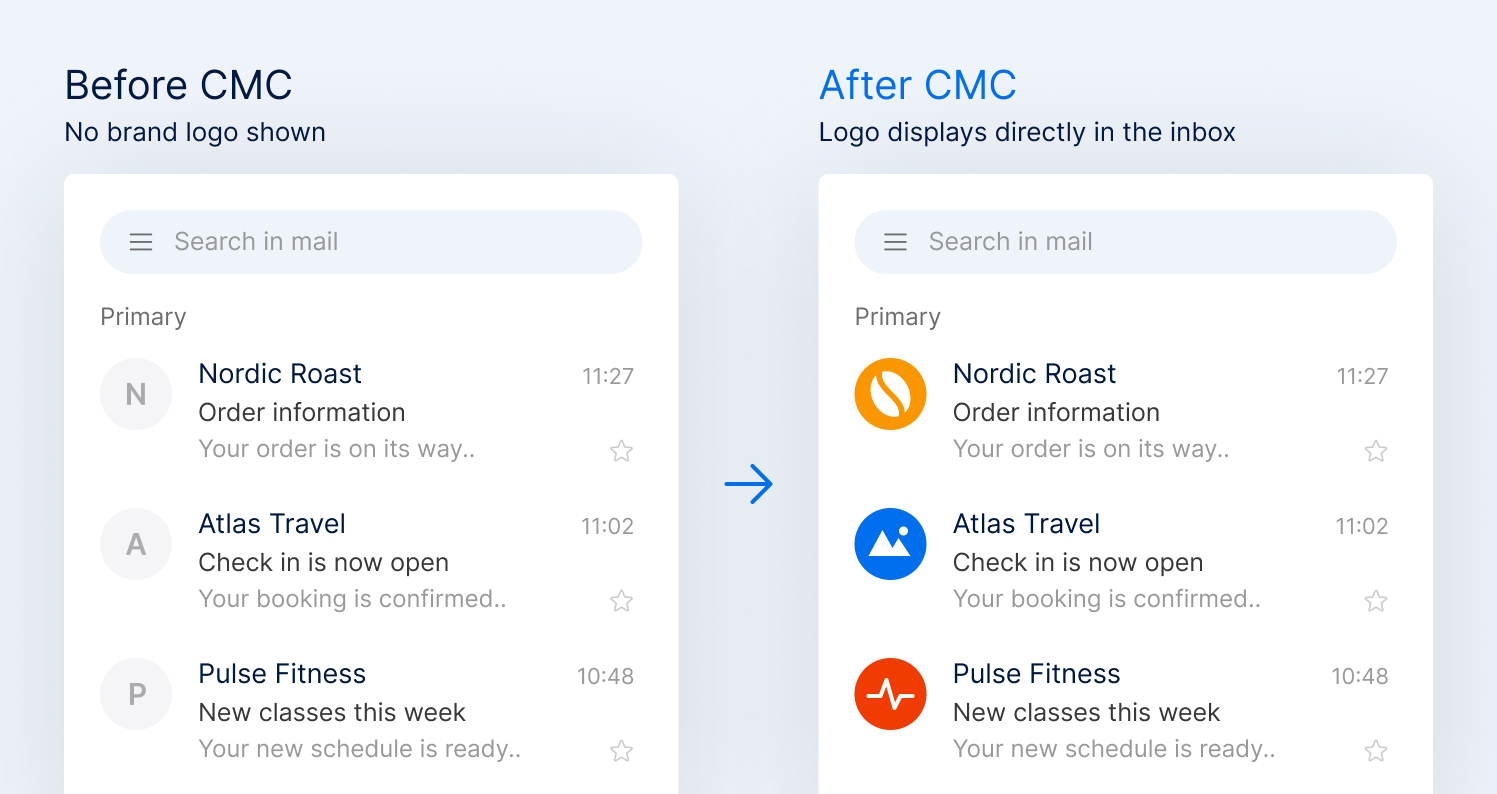
VMC vs. CMC: Which verified mark certificate do you need?
The cost of implementing BIMI and VMC
If you’re holding back on these email branding upgrades because of the associated costs, you may be surprised to learn that BIMI itself is free. The actual investment comes from implementation and certification, where brands typically choose between two options:
The hidden costs:
Regardless of which certificate you choose, remember that the cost isn't just the price of the certificate itself. You must also factor in:
- DMARC Configuration: Your domain must be at "Enforcement" status (p=quarantine or p=reject).
- SVG Formatting: Your logo must be converted into a very specific SVG Tiny 1.2 P/S file format to be valid.
How BIMI and VMC impact email branding
BIMI and VMC are often explained as technical upgrades or visual enhancements. That framing is incomplete. What they actually represent is a shift in where branding happens in email.
For years, email branding was treated as an in-email experience: layout, tone, personalization, and creative execution. But in 2026, the decisive moment has moved earlier.
It now sits in the pre-open layer, where recognition and trust are formed before a user even reads the subject line. And this shift is not theoretical. It is grounded in how users process information in the inbox.
1. Branding now begins before the email is opened

The average consumer receives over 126 emails per day. In that environment, users do not read linearly. They scan visually and make decisions in fractions of a second.
This is where BIMI introduces a structural advantage. By placing a verified logo directly in the avatar slot, it activates what research defines as the recognition reflex: the brain’s ability to identify visual symbols faster than text.
This changes the sequence of interaction.
Instead of:
- Read sender name → evaluate → decide
It becomes:
- Recognize logo → assume familiarity → decide
That difference reduces cognitive load and accelerates engagement. For e-commerce brands, this is critical because the inbox is no longer a place for discovery. It is a place for rapid filtering.
What brands are missing:
Most brands still design for the email body, not the inbox preview. They assume branding begins after the open, when in reality, the open itself is now dependent on pre-open recognition.
What to do differently:
Treat the inbox avatar as a primary brand surface. This means optimizing the logo specifically for BIMI requirements (size, contrast, centering), not simply repurposing existing brand assets.
2. Verification transforms recognition into a decision shortcut
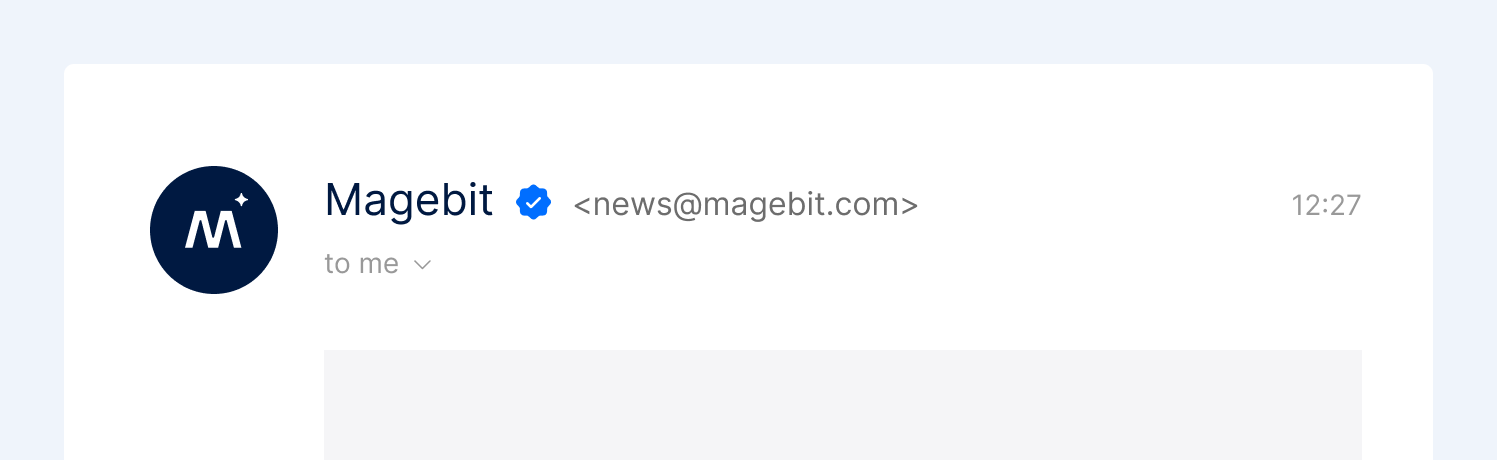
A logo creates familiarity. Verification creates confidence. This is where VMC plays a defining role.
Research shows that displaying a verified logo increases consumer confidence in an email’s legitimacy by up to 84% in the US and 90% in the UK. At the same time, brand recall improves by up to 44%.
This is not just about aesthetics. It is about reducing perceived risk.
In 2026, inbox behavior is shaped by caution. Phishing, spoofing, and AI-generated emails have made users more skeptical. As a result, every email is subconsciously evaluated for safety before engagement.
A verified logo acts as a shortcut in that evaluation. The Gmail checkmark enabled by VMC, in particular, has become a psychological benchmark for trust, similar to how SSL padlocks influenced website behavior in the early days of e-commerce.
What brands are missing:
Many brands stop at visibility. They implement BIMI but don’t pursue higher levels of verification, underestimating how much stronger the trust signal becomes.
What to do differently:
If trademark eligibility exists, prioritize VMC over CMC. The incremental cost is not a design upgrade—it’s a trust multiplier at the point of decision.
3. BIMI acts as a trust equalizer in competitive inboxes
One of the most strategically important, yet under-discussed, impacts of BIMI is its effect on brand hierarchy.
In a typical inbox, established brands dominate through recognition. Smaller or newer e-commerce brands struggle to compete because they lack that familiarity.
BIMI changes this dynamic. When a lesser-known brand appears with a verified logo, it is visually positioned alongside established players. The inbox no longer differentiates based on brand maturity; it reflects verification status.
The data reflects this shift. Lesser-known brands see a 21% increase in promotional open share in the US and up to 62% in the UK when BIMI is implemented.
This suggests that verification does more than signal trust. It effectively “vets” the brand for the user, reducing skepticism that would otherwise block engagement.
What brands are missing:
Smaller e-commerce brands often delay BIMI adoption, assuming it’s something to implement once brand recognition is already established.
What to do differently:
Adopt BIMI early. Use CMC as an entry point if trademarks are not in place. The goal is not to reinforce recognition—it is to accelerate it.
4. They accelerate engagement and compound revenue impact
The impact of BIMI is not just about getting more opens. It’s about changing how quickly and confidently users act.
Recent technical studies show that BIMI delivers an average 15–25% lift in open rates, with some implementations seeing 23% higher opens, 18% higher click-through rates, and a 31% reduction in spam folder placement.
That combination matters more than the numbers alone suggest. Because this is not a single-metric improvement. It’s a compounding effect across the funnel.
- Higher inbox placement → more emails seen
- Faster recognition → more emails opened
- Increased trust → more links clicked
And critically, this happens without changing the email itself. What BIMI does is remove friction at every step. It shortens the decision cycle. Users don’t pause to question legitimacy. They act.
That’s why time-to-open drops and delete-without-opening rates decrease significantly in BIMI-enabled environments.
What brands are missing:
Most brands are still trying to improve performance by optimizing content inside the email. But the biggest gains are now happening before the email is even opened.
What to do differently:
Treat BIMI as a funnel accelerator, not a visual add-on. Roll it out before high-volume campaigns, track time-to-open and inbox placement alongside opens, and evaluate its impact across the entire conversion path, not just top-line metrics.
5. They push you from “good deliverability” to a top-tier sender
Most e-commerce brands think of deliverability as a hygiene metric. Something you maintain, not something you compete on. In 2026, that mindset is outdated.
Deliverability is now a dynamic reputation pattern. Inbox providers evaluate senders based on a multi-dimensional score that includes authentication, engagement, and consistency over time.
Even small differences matter. For example, if you improve inbox placement from 86% to 92%, a brand with 1 million subscribers sending weekly will get 3.1 million more emails seen in a year.
That’s not a minor gain. That’s a revenue gap. And this is where BIMI and VMC/CMC come in. They act as extra proof of trust.
When inbox providers see that your domain is authenticated and verified through BIMI and certificates, it signals that your emails are more reliable. Over time, that helps you:
- Stay in the inbox more consistently
- Avoid being pushed to spam during high-volume sends
- Maintain performance even when something dips (like a spike in complaints)
What brands are missing:
They stop once emails are “delivering.” But delivering is not the same as maximizing reach.
What to do differently:
Use BIMI and VMC/CMC to elevate your sender reputation, not just maintain it. Because the real goal is not to send emails. It’s to make sure as many of them as possible are actually seen.
The 4-step BIMI readiness checklist
Take a look at this high-level roadmap to ensure your brand is actually eligible before you start the technical heavy lifting.
Step 1: DMARC enforcement (The gatekeeper)
- Your DMARC policy must be at enforcement level: either p=quarantine or p=reject.
- Crucial: A policy of p=none is for monitoring only and will not trigger your BIMI logo.
Step 2: SVG Logo optimization (The asset)
- Your logo must be in the SVG Tiny Portable/PS format.
- This isn’t a standard save-as; it requires specific XML attributes, no external links, and a square aspect ratio to render correctly in the inbox.
Step 3: Trademark verification (The logic)
- For VMC: You must have a registered trademark for your logo with a recognized government office (like the USPTO).
- For CMC: If you lack a trademark, verify that your logo has been in consistent, documented use to qualify for a Common Mark Certificate.
Step 4: Budget allocation (The investment)
- Secure a budget for the annual certificate fee. While the BIMI protocol itself is free, the VMC (required for the Gmail checkmark) is a paid security product issued by Certificate Authorities like DigiCert or Entrust.
Quick Tip: Before you buy a certificate, use a BIMI Inspector tool to verify your DNS records are aligned. If your SPF or DKIM is "breaking" your DMARC, your logo won't show up regardless of which certificate you buy.
The limitations of BIMI and VMC (and how to navigate them)
BIMI and VMC are powerful, but they’re not frictionless. The constraints are real, and they directly affect ROI if you don’t plan for them.
1. The technical barrier is stricter than most teams expect
BIMI is not hard conceptually. It’s unforgiving in execution.
- Logos must follow a highly restricted format (SVG Tiny PS)
- Certificates (VMC/CMC) require validation, legal checks, and setup time
- Even small errors can prevent logos from rendering
This is why many brands “implement BIMI” but never actually see it live. And there’s a deeper implication here.
Because BIMI ties your logo to authentication and verified ownership, inbox providers treat it as a security-controlled asset, not a design element.
What to do:
Approach BIMI as infrastructure, not design. Validate the SVG, test across providers, and plan for certificate lead times.
2. The Microsoft gap is real (and strategic)
This is the biggest limitation and the one that most blogs gloss over. As of 2026, Microsoft Outlook and Microsoft 365 do not reliably support BIMI rendering, meaning logos won’t appear in those inboxes.
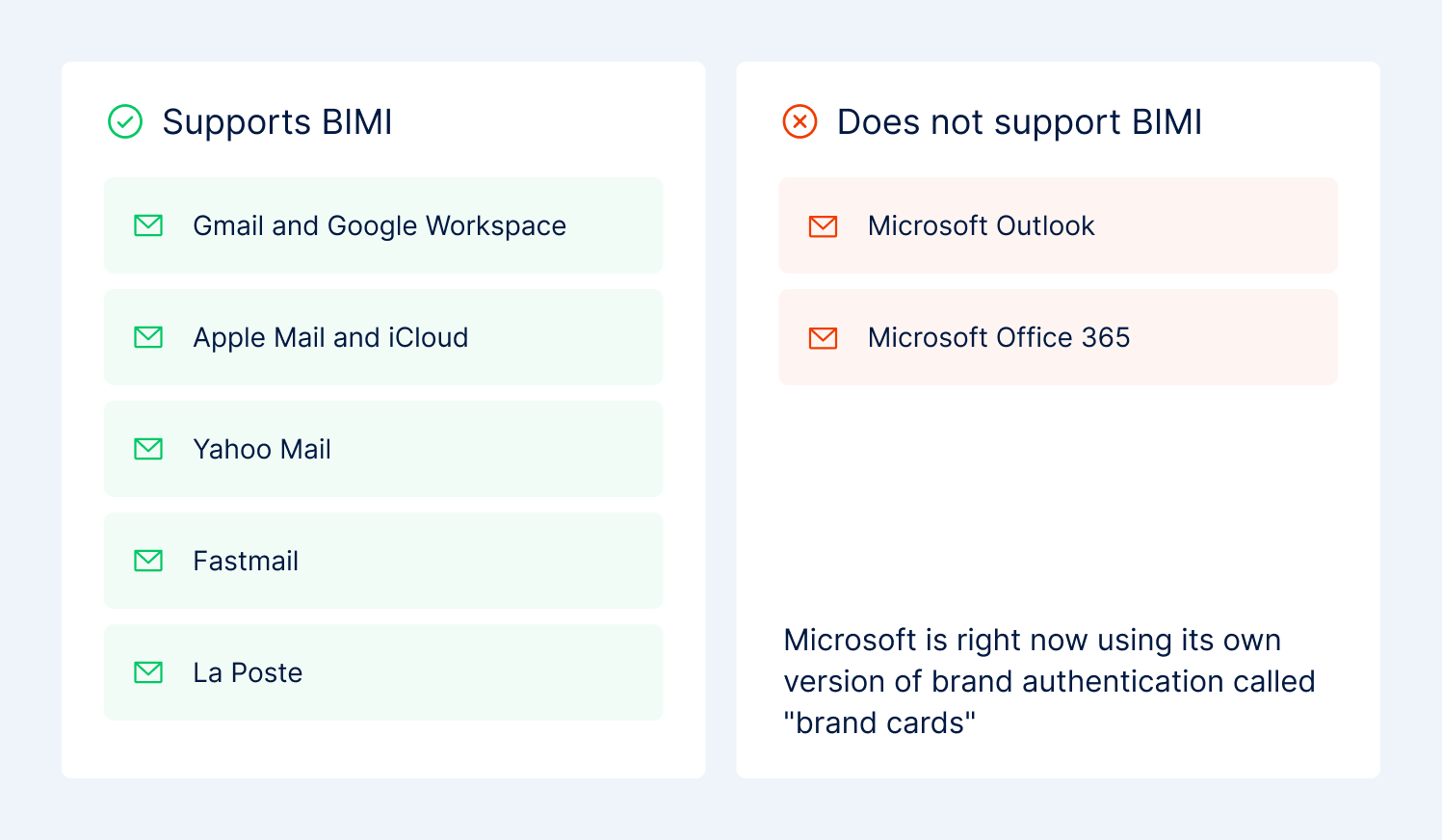
Even where limited previews exist, rollout is inconsistent and not fully available across enterprise environments.
This creates a clear split:
- B2C brands → strong impact (Gmail, Apple, Yahoo support BIMI)
- B2B brands → limited visual ROI (Outlook-heavy audiences)
But here’s the nuance most miss: Even without visual display, BIMI still improves authentication and sender reputation, which affect deliverability across all providers.
What to do:
Don’t evaluate BIMI only on logo visibility. For B2B, treat it as a deliverability and trust-layer investment, not just a branding play.
3. Adoption varies by region (and that affects ROI)
BIMI impact is not uniform globally, and that’s not just about provider support. It’s tied to how mature email infrastructure and authentication practices are in each region.
Data shows that North America leads in deliverability performance (~87.9%), while Asia-Pacific lags behind (~78.2%), largely due to differences in authentication adoption and infrastructure maturity.
This matters because BIMI builds on that same foundation. Regions with stronger adoption of SPF, DKIM, and DMARC are naturally more “BIMI-ready,” which is why performance and adoption trends tend to cluster there.
You can already see this reflected in BIMI performance data:
- North America shows stronger engagement lifts and adoption
- Europe shows slightly lower but more trust-driven engagement (influenced by compliance frameworks like GDPR)
- Asia-Pacific shows variable adoption, with stronger uptake in markets like Australia and Japan
Final thought
The inbox has quietly become one of the most competitive brand environments because attention has become harder to earn and easier to lose.
It’s no longer enough to be relevant once the email is opened. You have to be recognized and trusted before that moment even happens.
That’s where BIMI and VMC shift the equation. They take everything you’ve built on the backend (authentication, reputation, consistency) and turn it into something visible. Something a user can process instantly. And that’s the real advantage.
If you want to consistently win on email, you have to build for how the inbox works today. Not just better campaigns, but systems that ensure your emails are delivered, recognized, and trusted at first glance.
At Magebit, we’ve helped global e-commerce brands do exactly that by combining technical precision with strategy to improve deliverability, visibility, and performance at scale. If that’s where you want to go, get in touch with our expert.


Free tips to grow your store
eCommerce related news
New articles every month
Macaroni and cheese recipes
Check your inbox for tips.