11 core file overrides
There is no challenge for which they can't find a solution.

Will Aubuchon
CEO
A Magento 2 code audit that puts a number on technical debt. We read the whole codebase and tell you what it costs, what blocks your next upgrade, and what to ignore.

Adobe Commerce gold partner
#1 Adobe Commerce partner worldwide

Hyvä Platinum Partner
40+ projects delivered


ISO certification
9001 & 27001

Most certified Hyvä agency worldwide

200+ Adobe Commerce Certifications

Magento Association
Platinum Partner










Everyone agrees the codebase is messy. No code audit tool can price it, so it never gets budgeted and it compounds.
 Codebase summarySample audit
 Custom modules34
~30%
longer on every future feature. The team had been describing delivery as "slower than it used to be" for a year.
None of these break the store today. All of them make next quarter cost more than last.
The strongest predictor of a painful upgrade. Every override is a merge conflict waiting for the release you can't postpone.
Class preferences replacing core wholesale, so two extensions touching the same class become an unwinnable argument.
Modules whose vendor stopped shipping updates years ago, running with full database access and blocking every version bump.
Code written against methods Magento has announced it's removing. It works until the upgrade you need for a security patch.
No tests, no CI checks, no review requirement. Every release is a gamble that whoever wrote it was careful.
Undocumented, inconsistent code only its author can navigate, which turns onboarding into archaeology.
Ten areas, read across the whole codebase rather than sampled from whatever someone happened to open.
Every core modification, preference and rewrite, with what each one changes and what it costs at upgrade.
Injection, plugins, service contracts and module boundaries. Built the way Magento expects, or fighting it.
Every third-party module: version, maintenance status, advisories, conflicts, and overlapping work.
What breaks on the next version, listed before it does, mapped to the release that removes it.
Theme overrides, template duplication, and dependencies on Luma internals Hyvä would take away.
Coverage, pipeline configuration, and whether anything stands between a bad commit and production.
The expensive habits static analysis won't flag, because none of them is technically wrong.
Input handling, escaping, direct SQL, uploads and repository secrets, with anything serious escalated.
Plausible-looking code that misuses a Magento pattern, or re-implements what the framework provides.
How long a competent developer needs before shipping safely. The truest measure of code quality.
Four thousand violations is not four thousand problems. Presenting the raw count looks thorough and buries the findings that matter.
Real, cheap, and worth fixing automatically in a single pass.
Flagged, dated and scheduled. Not urgent, and we'll say so.
Sometimes the odd implementation was the right call. We ask before filing it as debt.
Installed, disabled, forgotten. The fix is deletion, not remediation.
Most merchants commission one because a version decision is looming. You get an answer.
Six blockers, each listed individually with the work to clear it, rather than a general sense of difficulty.
The honest version: which security patches you're forgoing, and how much bigger the same job gets in twelve months.

If a frontend rebuild is on the table, some theme debt stops being worth fixing. We'll say which to let go.
A Magento codebase is tens of thousands of files. Most audits sample a few and generalise.

Including the ones nobody documented.
So a systemic habit shows up as one pattern.
And finds logic duplicated across modules.
When the code carries no comments to explain it.

The odd implementation often had a real reason.
Against the risk of making it, and the release.
Rather than handing you twenty of equal weight.
AI reads and classifies. Engineers own the verdict.
Read-only copies of the code, scanned against Adobe's standards
Every custom module read and classified, not sampled
Every finding checked by a person before it reaches the report
Your code stays inside our ISO 27001 practice, under read-only access
revoked at the end, and is never used to train a model.
A debt figure with the reasoning behind it, and a plan that fits into normal releases.
Each finding names the file and what changed in it.
Feature drag, risk carried and the cost to clear, in numbers.
Each one openable and checkable, so nothing rests on our word.
Can you, what blocks it, what it costs, and what waiting costs.
Sequenced into normal releases, unlocking items first.
So no sprint goes on formatting while core overrides wait.
Not an account manager reading notes.
Recorded, so nothing is presented as clean by omission.
Usually because a decision is waiting on an answer nobody inside the team can give neutrally.
New agency, new team, or a business you bought. Find out what's in there before anyone touches it.
Knowing your debt before you price the project is the difference between a plan and a surprise.
When every estimate creeps and nobody can point at a reason, the reason is usually in the codebase.
Buying a business on Magento. We'll tell you what you're acquiring, and what year one of remediation costs.
Not to grade anyone. "Is our code good" is a fair question nobody inside the team can answer neutrally.
Which is usually a testing and process finding rather than a code one, and we'll say so.
Static analysis is part of the audit, not the point of it.
Every line the scanner raises gets a verdict. Only what costs money reaches the plan.
Read-only throughout, in an isolated analysis environment. No changes are made to your store.
 Access revoked when the audit endsNever used to train a modelHandled inside our ISO 27001 practice
 Git repositoryAccess
 0 changes made to your storeAnalysed on an isolated, read-only copy.
The codebase, plus history for intent and change patterns

Dependency versions, constraints and advisory matching

Release safety, automated checks and the review rules on every merge

The installed module list, reconciled against what the code contains

Behaviour verification without touching production, where available
Module count, codebase size and how much is custom decide the effort. Nothing is quoted from a template.
Module count, codebase size and how much is custom decide the effort.
Our Fixed Cost Estimate Guarantee: the approved number is final.
And phased, because clearing debt in one project is rarely the cheapest way.
Debt built up over years doesn't have to come down in one quarter. Remediation is sequenced into normal development so the store keeps shipping.
Findings become scoped work, priced up front and delivered through four quality gates.
The same developers every week, working the roadmap and the debt in parallel.
Static analysis produces thousands of warnings. Pricing them is the actual job.
Technical debt priced, not just counted
Upgrade blockers tied to a release
Varies
Your code separated from the platform's
Sometimes
Findings grouped by pattern, not by line
Debt distinguished from deadline
Varies
Remediation sequenced by dependency
Sometimes
Read-only, no changes to your repository

Kevin Hughes
European Technical Director

There is no challenge for which they can't find a solution.
Will Aubuchon
CEO

Within just two to three months, they resolved issues that previously seemed unresolvable.

Tim Johnson
CTO

What I value most is consistency. Magebit knows our store inside out, responds fast, and keeps it running smoothly year after year.
Marian Gaidoš
CEO

The top-ranked Adobe Commerce agency on the planet by Adobe themselves.





The most certified Hyvä agency in the world. Confirmed by Hyvä themselves, twice.
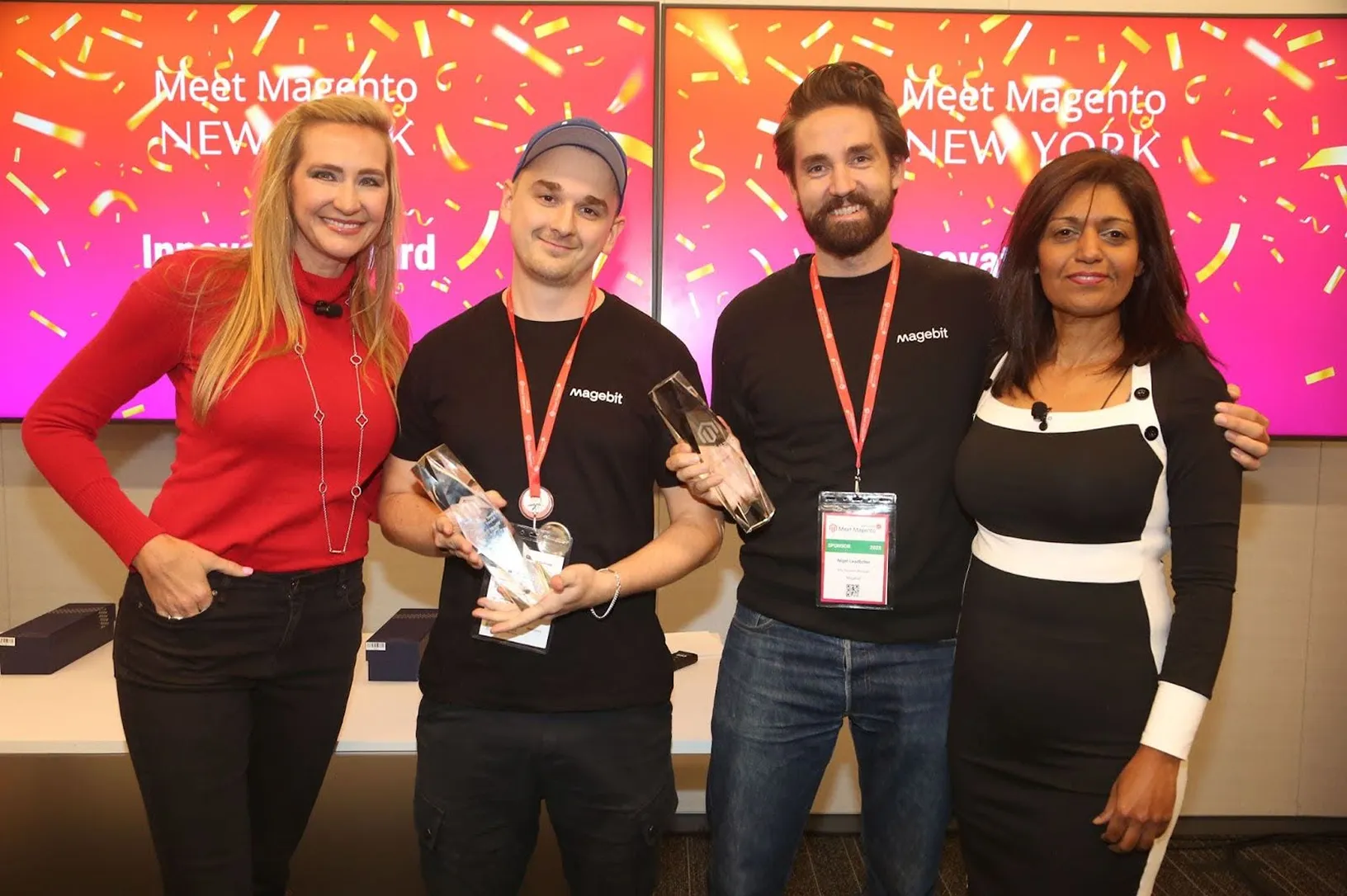
Innovator, World Traveler, and eCommerce Excellence awards across Meet Magento NYC and HIVE London, and more.

The most-certified Hyvä agency worldwide and the first Hyvä Platinum Partner in the USA. 55+ certified developers and 40+ projects delivered.

ISO 9001 & 27001 for quality and security.

Truly agile team that moves and adapts faster than your typical agency.

UX grounded in large-scale ecommerce research.
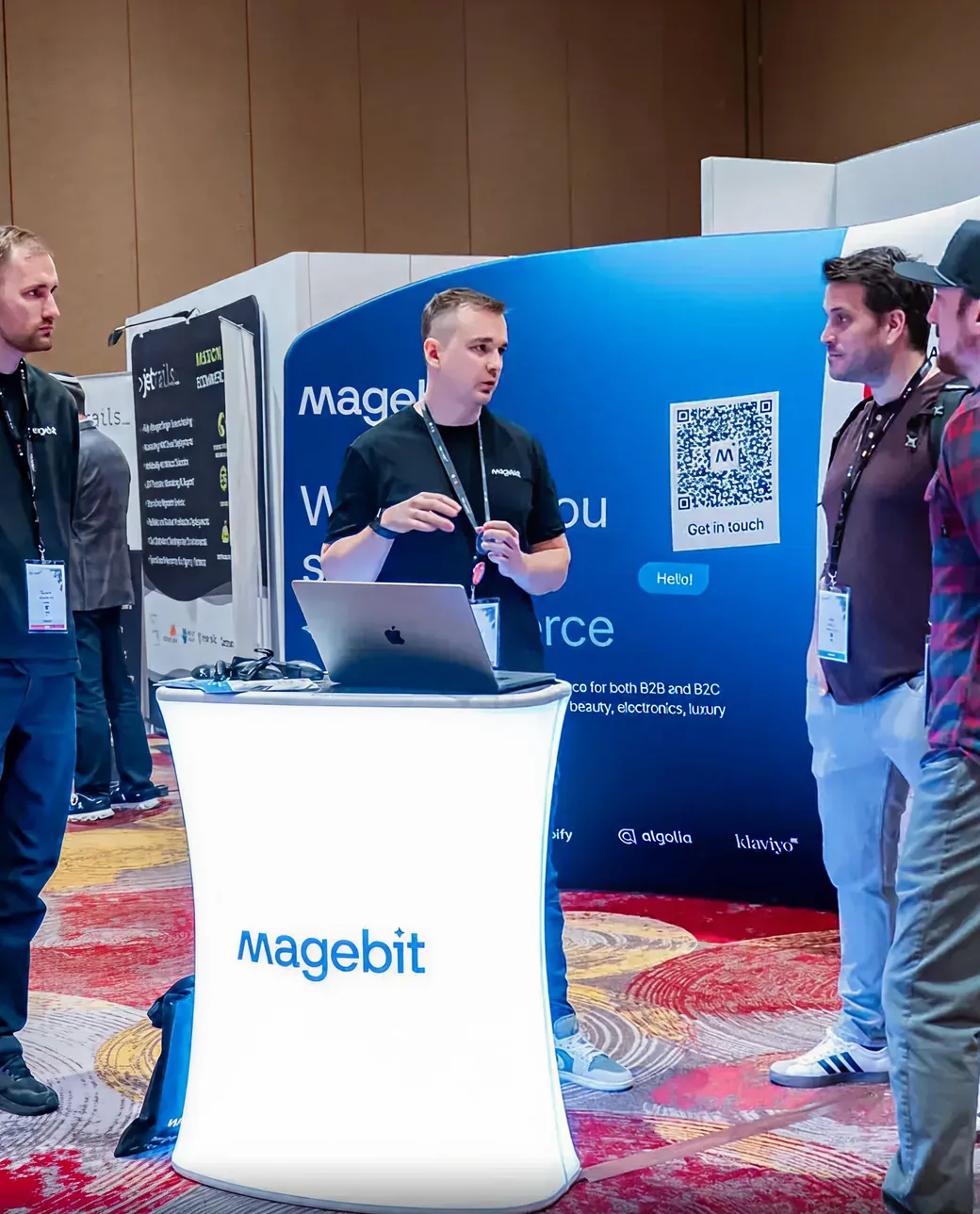
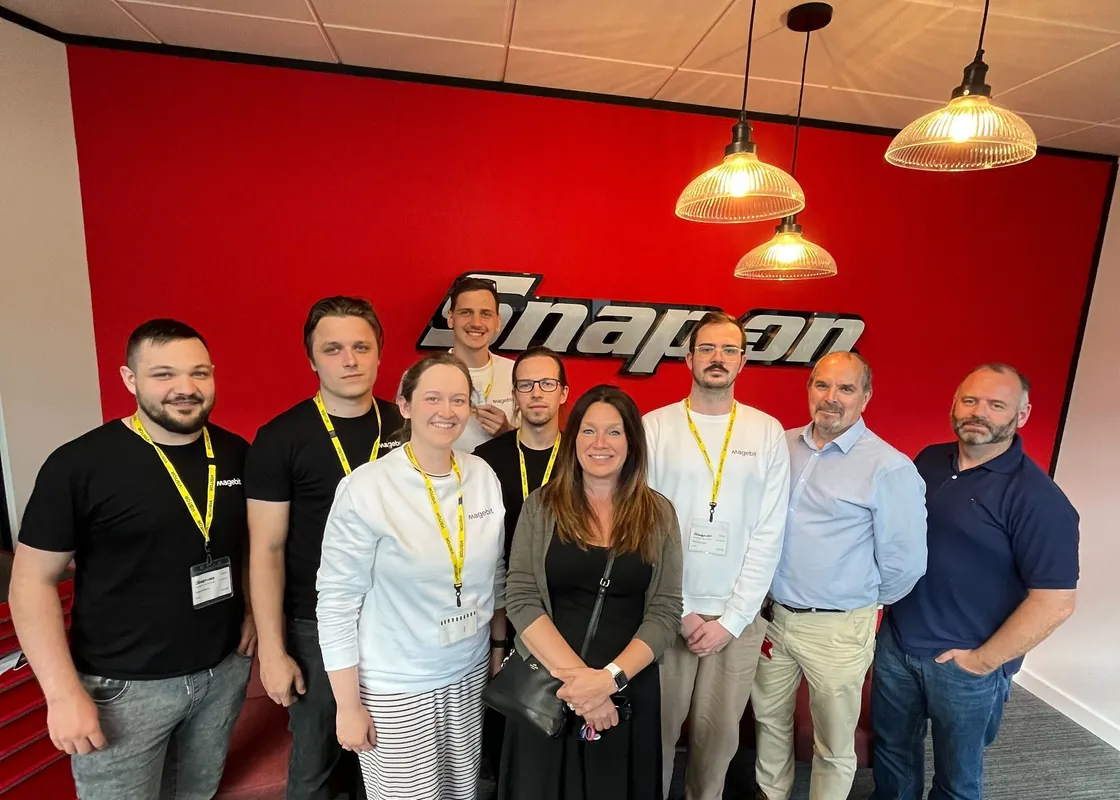
Magebit team at Meet Magento, #1 Adobe Commerce agency worldwide.
By certified developers, Magebit holds the number-one spot among Adobe Commerce agencies worldwide, and we’re the most certified Hyvä agency on the planet. Proof that the depth is real, not a logo on a page.

#1 Adobe agency worldwide

200+ Adobe certifications
#1 Most certified Hyvä agency

Adobe Subject Matter Expert
Every merchant with a slow development cycle already suspects the codebase. Without a number it never reaches the budget, so it never gets fixed. Give us read access and we'll give you the number.
Reviewed by Kristaps Rjabovs
Co-founder of Magebit, Forbes 30 Under 30

If you can't find the answer you're looking for, feel free to reach out to us. We're here to help.
We report what's in the code, not who wrote it. Most debt is the product of deadlines, staff changes and decisions that were reasonable at the time, and that context usually matters more than blame. If you want the audit to inform a conversation about capability, we'll give you the facts and stay out of the conversation.
Scoped on the first call against module count and how much of the codebase is custom, then quoted as a fixed price before work starts. Remediation is quoted separately and phased into normal releases.
Yes. A repository, composer files and pipeline configuration cover most of it. A few findings, runtime behaviour and configuration reconciliation, need more, and we'll record what we couldn't verify.
It gets specific attention. Unreviewed AI output tends to be plausible rather than correct: a Magento pattern misused, something the framework already provides re-implemented, an abstraction nobody needed. We build with agentic AI ourselves, under review, so we know what to look for.
Yes, and pair it with the security audit. Together they tell you what you're acquiring: the codebase's condition, the upgrade liability, the remediation cost for year one, and whether the platform is exposed or already compromised.
Rarely, and never as a default. Most codebases are worth repairing, and the report shows the maths either way: cost to remediate against cost to rebuild, so the decision is yours with numbers behind it.
Read-only access to the repository is enough to start. You'll get a debt figure, severity-ranked findings with file references, a straight upgrade verdict, and a list of what not to bother with.
Not a sales script.
What the current state costs, and what fixing it costs.
The findings are yours to keep.
We use cookies.
Some help us see how the site is used and measure our ads. You choose — until you do, no cookies are set and Google receives only cookieless signals that don't identify you. Privacy Policy