Synced both ways
Stencil
Most storesBigCommerce's hosted theme framework.
- Built with: Server-rendered Handlebars, SCSS and JavaScript
- Content editing: Page Builder
- Hosting and running cost: Hosted by BigCommerce, included in the plan
BigCommerce development services for Stencil themes, Catalyst storefronts, ERP integrations and custom apps, with every task estimated first.













BigCommerce runs the hosting and checkout. What's left is a fixed set of building blocks and limits, and a good build designs around them in discovery, not after launch. Part of our BigCommerce agency services.
Our developers use AI agents to ship faster, with PM, QA and a solution architect around them.
API quota, 600 variants per product and redirect rules are budgeted before code.
Under the Fixed Cost Estimate Guarantee, the approved estimate is what you pay.
One team handles the storefront, the data behind it and the store after launch. The same developers do all of it.
Custom Stencil themes and Cornerstone customisation: Handlebars templates, SCSS and Page Builder widgets your team edits without a developer. Design runs through BigCommerce web design.
Catalyst storefronts on Next.js and the GraphQL Storefront API, with Makeswift for visual editing.
NetSuite, Business Central, SAP Business One, Akeneo, Avalara, Algolia or ShipStation, connected by API, webhooks or middleware like Celigo.
Company accounts, quotes and the Buyer Portal, plus the contract pricing and approval logic B2B Edition leaves to you.
Private apps for one store and public apps for the App Marketplace, built when no existing app fits or three apps do one job badly.
Products, customers and orders moved from Magento, Shopify, WooCommerce or Volusion, with every ranking URL redirected.
Six things we see on almost every BigCommerce store that has outgrown its first build.
Every app shares one quota, so ERP, search and reviews compete for it.
Dead pixels and app scripts removed, the rest deferred.
Attributes and descriptions that AI channels and feeds can read.
Multi-Storefront for a new brand, region or wholesale site.
Contract prices and approvals synced, not keyed in twice.
Support on an hour bank, or a dedicated team for the roadmap.
Moves the NetSuite stock sync from polling to webhooks and batched calls.
Load tested on staging at three times peak traffic.
 Merino hiking sock
Every BigCommerce website development project starts with this choice. Stencil is the hosted theme framework most stores run on. Catalyst is BigCommerce's open-source (MIT) headless storefront.
BigCommerce's hosted theme framework.
BigCommerce's open-source Next.js storefront.
Three checks settle Stencil or Catalyst for your store, and the answer goes in writing before the estimate.
If it isn't what holds sales back, Stencil is faster and cheaper to run.
Headless CMS content, custom product experiences, several locales on one codebase.
Catalyst adds hosting and deployments; we can run them through a dedicated BigCommerce team.
BigCommerce is SaaS with open APIs. You don't patch servers or apply security releases. A good BigCommerce development company builds on these strengths.
On Stencil, slow stores rarely come from the platform. They come from what was added to it. We start in four places.
Pixels and app scripts audited, removed or deferred.
Each storefront app can inject its own JavaScript and CSS.
Missing srcset sizes and oversized hero images slow LCP.
Heavy carousels and unused JavaScript slow INP.
We measure LCP, INP and CLS per template from field data, before and after the work. On Catalyst you control rendering and caching, so the bundle needs an owner.
Multi-Storefront runs several storefronts from one control panel and catalogue. The setup is configuration. The engineering is in what connects to it.
ERP and PIM know which storefront and price list an order uses.
Separate redirects, sitemaps and hreflang, audited by our BigCommerce SEO team.
One codebase serving several storefronts and languages.
Several storefronts on one store draw from one quota.
Different providers and currencies change fees and tax setup.
We plan the storefront structure before the build, because moving orders and customers between storefronts later is expensive.
BigCommerce released these AI and agentic features in April 2026, all generally available. They work best on clean data, so most of the work is upstream: attribute gaps, Feedonomics feeds and product content at catalogue scale.
What it does: Enriched product data, distributed to ChatGPT, Gemini, Copilot and Perplexity.

Attribute gaps filled across variants
Feedonomics feeds checked against the product page
Product content written at catalogue scale
What we prepare: Product data those channels can read and quote, from the same source as your feeds.
What it does: An AI agent can complete a purchase.
Live prices and stock exposed to the agent
Shipping and tax rules returned at checkout
Orders flow into the same ERP sync
What we prepare: Prices, stock and shipping an agent can trust, so the order it places is the order you can fulfil.
What it does: Product discovery on the storefront by plain-language question.
Attributes mapped to how shoppers describe products
Synonyms and units added for your catalogue
Zero-result questions reviewed after launch
What we prepare: Attributes and synonyms that let a plain-language question land on the right products.
What it does: An assistant for your team in the control panel.
Catalogue structure kept consistent
Order and customer data kept clean
Your team shown what to ask it
What we prepare: Clean catalogue and order data, so Companion's answers match what your team sees in the store.
Two ways to put a chatbot on a BigCommerce store. The difference shows the first time a shopper asks about their own order.
A ready-made app from the BigCommerce App Marketplace.
Built by our developers on your store's own APIs.
Builds run on FLOW, Magebit's 12-year delivery framework: Frame, Lay groundwork, Output, Win. We get up to speed fast and ship working pages in the first weeks.
How your store works today, and what to build
Before anything is designed, we learn your catalogue, integrations and goals, and confirm the platform fits.
 Platform fitStencil or CatalystBuild or install
 Discovery & planning
Platform fit
Confirmed
Storefront
Stencil
Apps to install
6

Clarity
of next steps

Reduced
risks

Time
efficiency
A written plan, agreed before sprints start
Store structure, scope and estimate are signed off, and environments are ready.
Store structureAPI budgetFixed estimateBuilt in sprints and tested on staging
Design and development run in short sprints, with working pages demoed each time.
Sprint demosData and integrationsDaily QA and UATReleased with a checklist, then handed to your team
A rehearsed go-live with a rollback plan, documented and watched after launch.
Launch checksRollback planHanded overGO
4 of 4
Checks passed
UAT signed offDry run cleanChecklist completeTeam on callAfter launch
Hypercare, then SLA
Standing by
Rollback plan
Many projects start on a live store someone else built. We review it first and hand you a written fix list in priority order, each item estimated.
How far it has drifted from Cornerstone and what that blocks.
Every installed app and what it injects through Script Manager.
How much API quota each one uses, and what breaks when it runs out.
We don't publish rates, because two BigCommerce stores rarely need the same build. What sets the cost:
A customised theme costs least, a custom Stencil theme more, Catalyst the most.
Each ERP, PIM or OMS connection is its own work; two-way sync costs more.
B2B Edition setup is configuration; ERP-driven pricing and approvals are development.
Catalogue size, order history and the number of URLs to redirect.
The BigCommerce plan, app subscriptions, payment provider fees and Catalyst hosting.




Sam Slater
eCommerce Manager

Magebit feels like an extension of our own team. Whatever we need across the store, they handle it quickly and well, and the site keeps getting better.

Jad Haidamous
CEO

Appreciate everyone’s hard work and effort in moving us forward!

Alex Brynou
Director of Systems Architecture

There is no challenge for which they can't find a solution.

Will Aubuchon
CEO

An official BigCommerce Partner, building, migrating and supporting BigCommerce stores.

100+ certified eCommerce specialists with 12 years of eCommerce delivery.
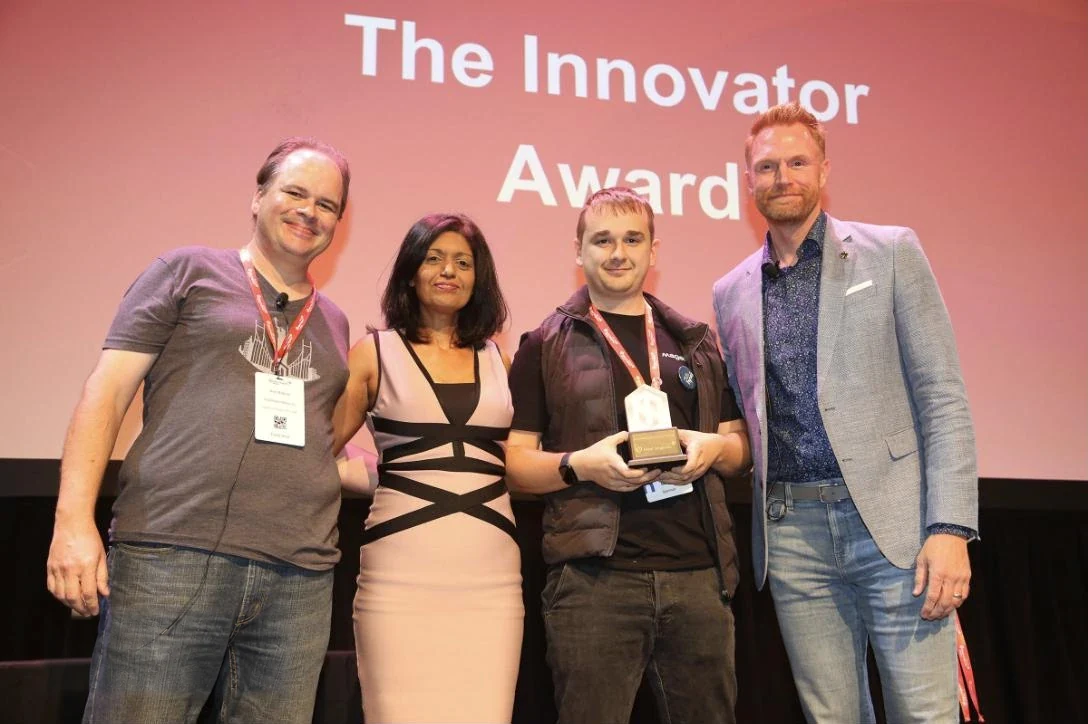
Three eCommerce Excellence awards for storefronts judged on performance and results.
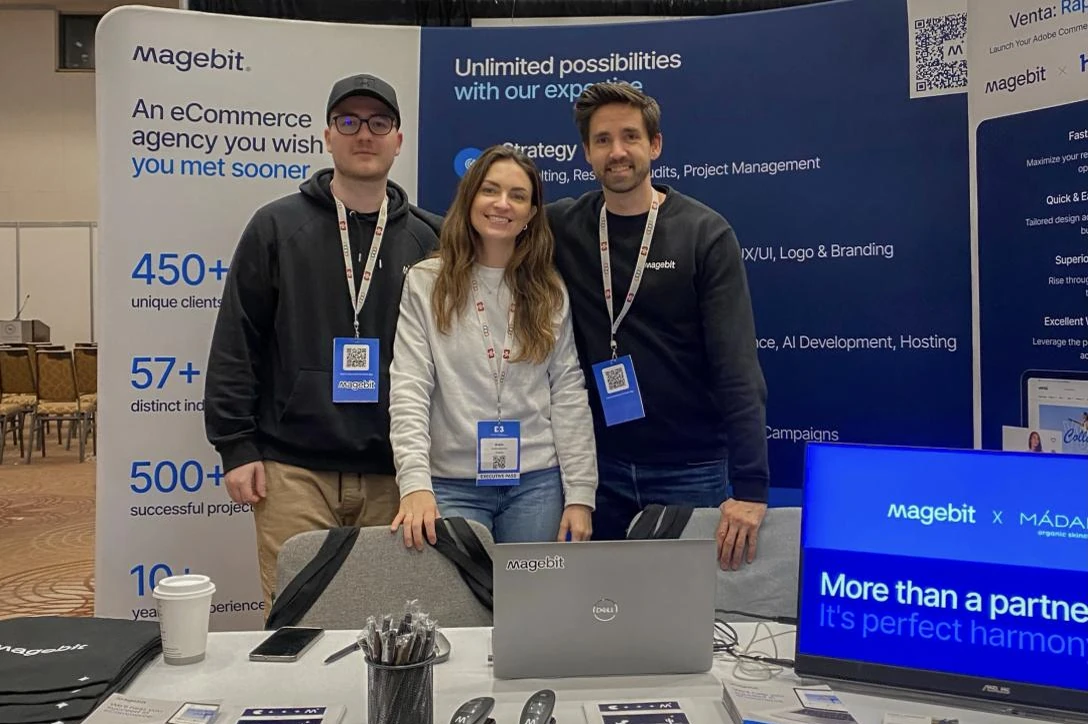
UX grounded in large-scale eCommerce research, backed by Baymard and CXL training.
ISO 9001 & 27001 for quality and security.
Scrum-certified delivery teams that ship in short, planned sprints.

Email and SMS flows and campaigns set up and run in-house.
Stencil or Catalyst, which apps, how much of the API quota your integrations will use: these choices set most of the cost in the first two weeks. We make them in discovery, in writing, before the estimate.
Reviewed by Kristaps Rjabovs
Co-founder of Magebit

It depends on the storefront, the integrations and the data volume. A customised theme costs least, a custom Stencil build more, and a Catalyst build the most, with hosting on top. We estimate every task before work starts, and under our Fixed Cost Estimate Guarantee the approved estimate is what you pay. The BigCommerce plan and app subscriptions are separate running costs.
Catalogue size, the number of integrations and how custom the storefront is set the date more than design does. A Catalyst build with ERP and B2B Edition takes longer. As an example, a theme-based migration like Blue Force Gear's took two months from kick-off to go-live. We give you a timeline with the estimate after discovery.
Stencil if your team edits in Page Builder and the storefront isn't what limits sales: it's hosted by BigCommerce and costs least to run. Catalyst, built on Next.js and the GraphQL Storefront API, if you need a frontend Stencil can't produce, such as content from a headless CMS or several locales on one codebase. Catalyst costs more to build and adds hosting you maintain.
A BigCommerce developer builds and maintains the storefront, in Stencil with Handlebars or in Catalyst with Next.js. They connect the store to ERP and fulfilment systems through the REST and GraphQL APIs and webhooks, and build apps when the App Marketplace has nothing that fits. Our developers are agentic-first and use AI agents to ship faster. To add developers to your own team, see hire dedicated BigCommerce developers.
Yes. The REST API allows 150 requests per 30 seconds on Core and Growth and 450 on Scale; Performance limits are set by contract. Every app installed on the store shares that quota, so an ERP sync, a search app and a reviews app compete for it. Integrations need to be designed around the quota, batching calls and retrying on errors, before they go live.
When products need more than 600 variants, when checkout logic goes beyond what the hosted checkout and Checkout SDK allow, or when you need code-level control of the backend and your own hosting. Adobe Commerce is usually the better fit then, and Shopify allows 2,048 variants per product. We build on all three, so we recommend the one that fits your store.
Yes. After go-live the store moves into BigCommerce support and maintenance, where every task is estimated first and work runs against a prepaid hour bank. Covered stores also get 24/7 emergency support: a certified developer working on the problem within one hour, any day of the year. For a larger roadmap, a dedicated team continues the work.
Send us the store, the systems it connects to and what you want it to do in a year. A specialist replies with questions, then a written scope and estimate.
Your goals, your stores and what's in the way.
An honest recommendation, free of charge.
The plan, the team and the price, agreed first.
We use cookies to understand visits, show relevant ads and play videos. You choose what to allow.