
Most eCommerce operators spend significant time optimizing their ad spend, conversion rate, and product margins. They A/B test headlines, negotiate supplier prices, and track cost per acquisition down to the cent.
And then they pay their shipping invoice without looking at it.
Shipping costs are treated as fixed - something that just is what it is. The carrier sends a bill, the bill gets paid, and the assumption is that the cost is more or less correct and more or less unavoidable.
That assumption is expensive. The numbers make the scale of this clear:
- Total logistics costs for eCommerce businesses now account for 12-20% of revenue, with projections putting that figure at 15-25% as last-mile costs continue rising
- UPS, FedEx, DHL, and USPS all raised rates by 4-9% in 2025 alone, on top of comparable increases in 2024
- Shipping costs in the US have increased more than 40% over the past five years
- The average eCommerce merchant pays $7.96 to ship each order - a baseline that compounds across thousands of shipments
- Nearly 80% of carrier invoices contain discrepancies or errors - meaning most merchants are overpaying, and do not know it
- Parcel audit software alone can save businesses 5-20% on shipping invoices annually
These are not minor inefficiencies. For a store shipping 500 orders a month at an average cost of $8 each, that is $4,000 a month in shipping spend. A 15% reduction from optimization is $600 a month - $7,200 a year - recovered without changing a single product, running a single promotion, or acquiring a single new customer.
Shipping is not a fixed cost. It is a managed cost. The question is whether you are the one managing it.
This article covers every meaningful lever for reducing and optimizing shipping costs - from the basics of box sizing to carrier negotiation, invoice auditing, mail injection, and outsourced fulfillment. Not every tactic will apply to every store. But for most merchants, there are multiple areas where significant money is being left on the table right now.
Part 1: Dimensions, Weight, and Packaging
Before touching carrier contracts or pricing strategy, start here. Packaging is the most direct lever for reducing shipping costs because it determines what you are charged before anything else does.
Understand Dimensional Weight - and Stop Ignoring It
Dimensional weight (also called DIM weight or volumetric weight) is one of the most misunderstood charges in eCommerce shipping - and one of the most expensive when ignored.
Here is how it works: carriers do not charge only based on how heavy your package is. They charge based on how much space it takes up in a truck or aircraft. A package that weighs 1kg but is packaged in a large box may be billed at the equivalent of 8kg or 10kg, because that is how much space it occupies relative to other freight.
The formula carriers use is: Length x Width x Height (in cm) divided by a DIM divisor (typically 5000 for international shipments, 4000-5000 for domestic depending on the carrier and contract). The result is the dimensional weight. Whichever is higher - actual weight or dimensional weight - is what you pay.
Example: A box measuring 40cm x 30cm x 20cm has a volume of 24,000 cm3. Divided by a DIM factor of 5000, the dimensional weight is 4.8kg. If the actual product weighs 800g, you are still billed for 4.8kg - six times the actual weight.
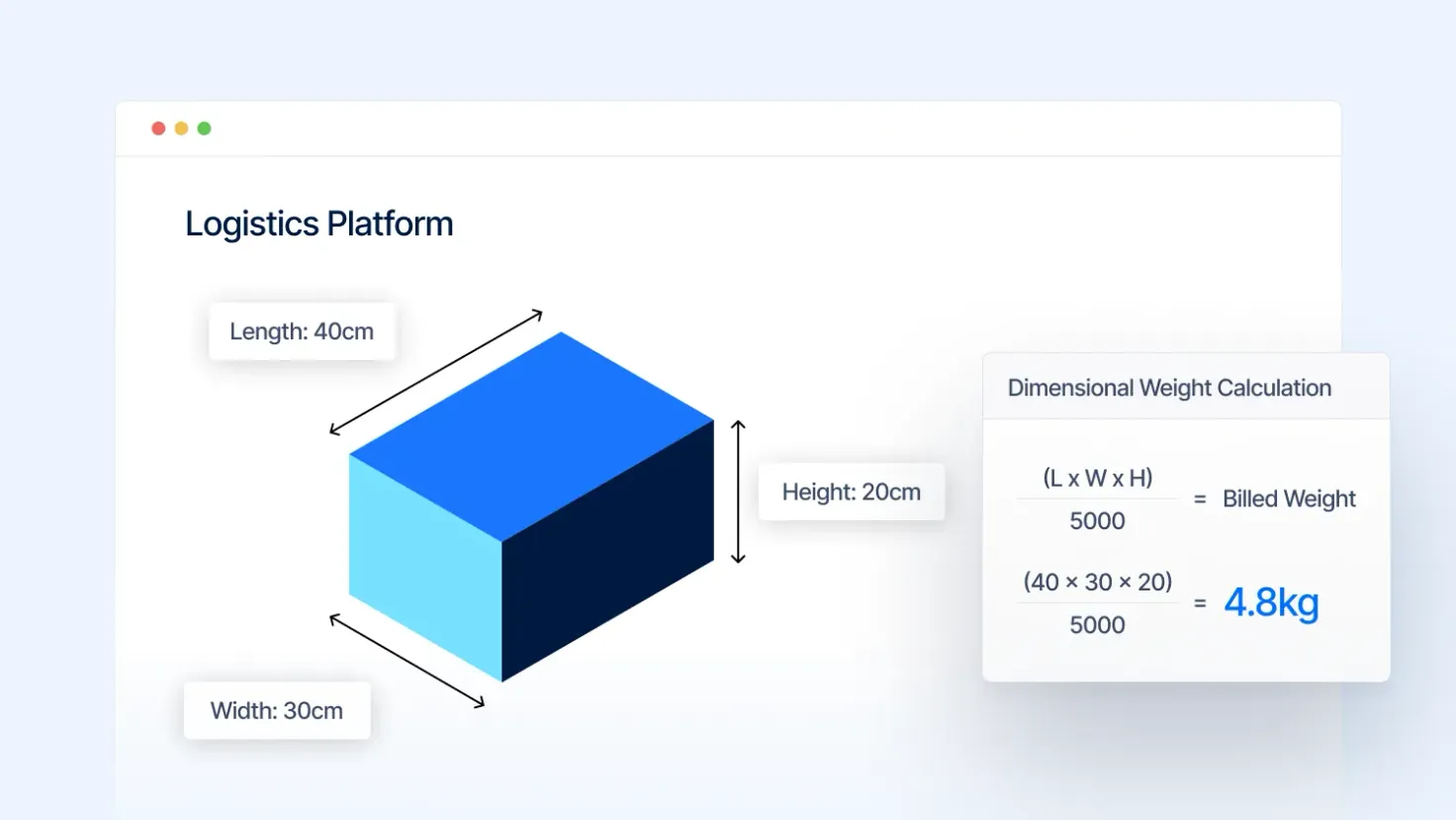
Dimensional weight calculation example
One oversized box can cost 30-50% more than expected. That difference, repeated across hundreds or thousands of orders, compounds into a significant annual overpayment.
What to do:
- Audit your most commonly shipped SKUs and calculate the DIM weight versus actual weight for each
- Identify your top offenders - typically 5-10 products account for most of the DIM weight overcharges
- Switch to smaller boxes for those SKUs wherever possible
- Reducing just one inch in each dimension for a commonly shipped product can drop it into a lower billable weight tier - that saving, repeated thousands of times a year, is meaningful
- If your carrier uses a DIM divisor, check whether your contract specifies it - and whether you can negotiate a better divisor at higher volumes
Stop Over-Protecting Your Packages
There is a widespread belief in eCommerce that more packaging protection means fewer damaged products. In most cases, this is wrong.
Packages are not usually damaged because they lack padding. They are damaged because of rough handling by carriers - packages being dropped, crushed under other freight, or misloaded. Additional bubble wrap inside a large box rarely prevents that. What it does do is increase the box dimensions, increase the DIM weight, and increase your shipping cost on every single order.
The smarter approach: use a smaller, well-fitted box with minimal void fill, and choose a carrier with a reliable damage rate rather than trying to compensate for a bad carrier with extra padding.
- Smaller, snug packaging protects better than large boxes with void fill, because there is less room for the product to shift
- If damage rates are a real problem, the solution is a better courier - not more bubble wrap
- Every gram of excess packaging material adds to actual weight, and every extra centimeter adds to dimensional weight
Lighter, more compact packaging with a reliable carrier is better customer service and better cost management than over-padded boxes sent by a cheap courier.
Minimize Empty Space
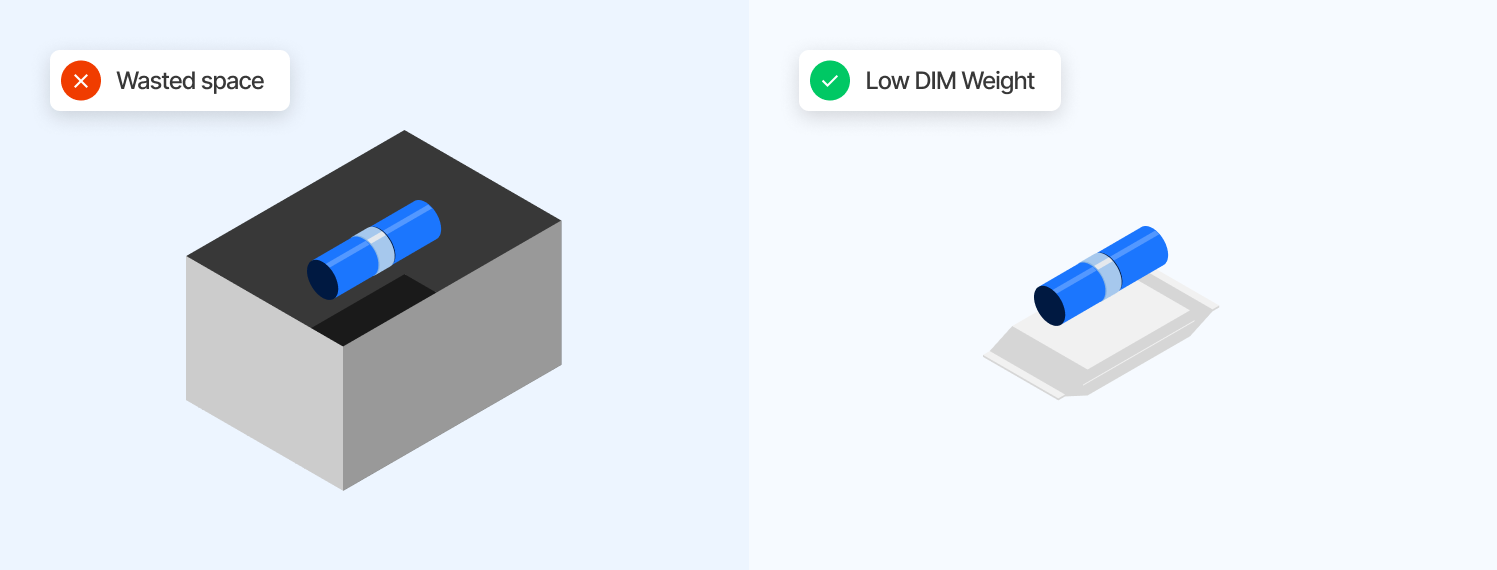
Oversized vs compact packaging comparison
If you manufacture or source your own products, packaging optimization is available to you at the product level - not just the box level.
- Can the product itself be made more compact? Some products are shipped in retail packaging that is deliberately oversized for shelf appeal, but that packaging adds cost on every shipment
- Can retail packaging be redesigned to reduce volume without affecting the customer experience?
- For your own branded products, even small reductions in product or packaging dimensions can translate into significant annual savings when multiplied across order volume
Check Weight Thresholds
Carrier pricing is tiered by weight. Moving from one weight tier to the next - even by a few grams - triggers a jump to the next pricing band. This is one of the easiest optimizations to miss because it only requires a small change to save a meaningful amount.
What to do:
- Pull your last 90 days of shipment weights and look for clusters just above threshold boundaries
- Common thresholds to check: 500g, 1kg, 2 kg, 5kg, 10kg, and the equivalent in pounds
- If a significant number of your orders are landing at 1.05kg, for example, investigate whether minor packaging changes could bring those under 1kg
- Even a 50g saving per package can shift hundreds of orders into a cheaper tier
Consider Split Shipments
This one is counterintuitive, but it works in certain situations: sometimes sending two small packages is cheaper than sending one large one.
When a combined order crosses a dimensional or weight threshold - into a larger box, a different weight tier, or an oversized surcharge bracket - the combined shipping cost can exceed what it would cost to send two separate, smaller packages that each stay within lower-tier thresholds.
The customer experience is not necessarily worse. Carriers like FedEx and UPS allow multiple boxes on the same tracking number. The customer gets one tracking link, two boxes arrive, and you pay less than you would have for one large shipment.
- Model the cost of combined versus split shipments for your most common multi-item order combinations
- If split shipping saves money without impacting delivery time, it is worth implementing
- Make sure your packaging setup and pick-and-pack process can accommodate split shipments efficiently before rolling this out
Standardize Your Box Sizes

Standardize your shipping box sizes
Having too many box sizes creates operational complexity and makes it harder to optimize. Having too few means products end up in boxes that are too large.
The practical approach is to settle on a small number of standard sizes - typically three to five - that cover the majority of your SKUs well, and align those sizes with the dimensional weight thresholds of your primary carriers.
- Identify the two or three most common shipment sizes in your current operation
- Design or source standard boxes that fit those sizes snugly
- Train your packing team on which box to use for which product combination
- Standardization also reduces packing time, reduces packing material waste, and makes inventory management simpler
Carrier-provided packaging is another option worth evaluating. FedEx and DHL supply free envelopes, boxes, and tubes for certain service types. If you qualify, this eliminates packaging cost and procurement overhead entirely - and frees up warehouse space previously occupied by packaging stock.
Packing Labor Is a Shipping Cost Too
Most merchants calculate their shipping costs as the carrier invoice. But the actual cost of getting an order out the door also includes the labor, time, and infrastructure required to pack it - and this is where a significant amount of money quietly disappears.
Think about how long it takes your team to pack a single order. If it takes five minutes per order and you are shipping 200 orders a day, that is over 16 hours of packing labor daily. At any reasonable hourly rate, that is a substantial cost that never shows up in your shipping invoice but belongs in your total fulfillment cost calculation.
The questions to ask:
- How long does it actually take to pack one order from start to label? Time it properly - most merchants significantly underestimate this
- Is your packing station set up properly? A well-designed packing table with materials in the right places, a label printer mounted correctly, and a clear workflow can cut pack time by 30-50% compared to a disorganized station
- Are you using the right label printer and printing process? Thermal printers and integrated label generation are dramatically faster than printing on a standard printer and taping labels on
- How many people does your current packing operation require? If better station setup, clearer box selection rules, and streamlined materials could reduce that from three people to one, that is a two-person labor saving compounding every single day
- Is your pick and pack process creating unnecessary movement - walking to find products, searching for the right box size, hunting for tape? Warehouse layout and process design are free optimizations that directly reduce labor time per order
Packing efficiency compounds at scale. Reducing average pack time by two minutes per order across 5000 monthly shipments is 166 hours of labor saved per month. For many small and mid-size operations, process improvements to the packing station represent one of the fastest and cheapest ways to reduce fulfillment cost - and they require no carrier negotiation, no contract review, and no new technology.
If you are planning to scale order volume, inefficient packing becomes expensive fast. A process that works with one person at 50 orders a day often requires three people at 300 orders a day - not because the work is harder, but because the workflow was never designed properly. Fix the process before scaling the volume.
Part 2: Carrier Pricing and Contract Optimization
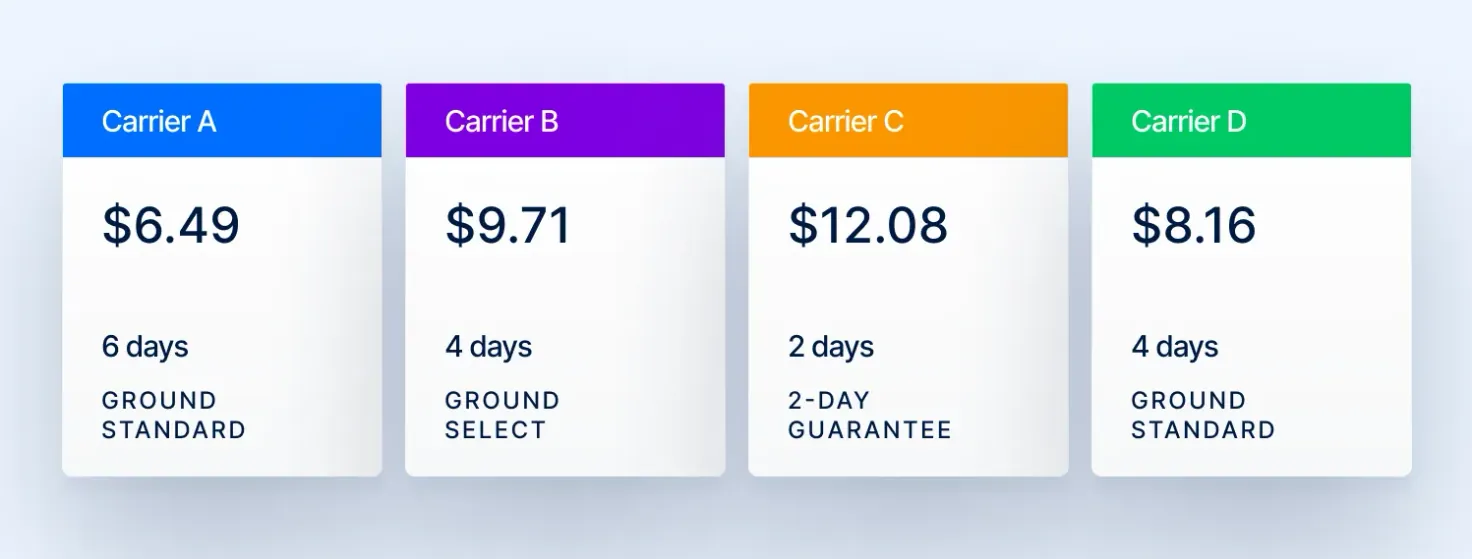
Negotiating with multiple carriers
Once packaging is under control, the next largest lever is what you are actually paying per shipment - and whether that rate reflects your volume, your loyalty, and the competitive market you operate in.
Never Accept the First Price - and Never Stop Negotiating
Carrier pricing is negotiable. This is true at every volume level - but most merchants, especially smaller ones, accept published rates or first-offer contract terms without pushing back.
Carriers want your volume. Their published rates are starting positions, not fixed prices. The question is whether you know what to ask for.
- Do not sign or renew a contract without requesting a rate reduction first
- Even a 5-10% reduction on a contract renewing at current rates is a meaningful saving across a full year
- If you have been with the same carrier for more than two years without renegotiating, you are almost certainly overpaying
- Negotiate not just base rates, but also the DIM divisor, fuel surcharge caps, and accessorial fee treatment - including residential delivery surcharges, which many merchants assume are fixed but are in fact negotiable
One thing most merchants do not realize: there is no limit to how many times you can negotiate. When a carrier offers a better deal, accept it, bank the savings, and continue working with them. That is a win. If another carrier later offers something even better, go back to your current carrier with the new number. The conversation does not end.
Carriers will not add clauses that prevent you from switching or from having contracts with competitors. You are under no obligation to ship exclusively with any carrier unless you have explicitly agreed to that in writing - which you should never do. The leverage only exists while you have real alternatives, so maintain them.
Getting a better deal is not the end of the negotiation. It is the new baseline. Keep going.
Have Active Contracts With Multiple Carriers
The single most powerful negotiating tool you have is a real alternative. If your current carrier knows you are actively using a competing carrier and have a live rate to compare, every conversation about pricing changes.
Running active contracts with two or three carriers serves multiple purposes:
- It gives you real data on what the market rate actually is for your shipment profile - not what one carrier claims is a good deal
- It allows you to route each shipment to the cheapest carrier for that specific destination, weight, and service level
- It protects your operation if one carrier has a service failure, price increase, or capacity issue
- Every time you renegotiate with any carrier, you walk in with documented alternatives and real numbers
The more different pricing options you have, the stronger your position in every negotiation. A carrier that knows you have three alternatives is in a very different conversation than one that knows you have none.
Not every carrier is equally strong in every market or region. One may have excellent rates and performance domestically but be expensive and slow internationally. Another may have strong coverage in specific countries but poor performance elsewhere. There is no single carrier that wins on everything everywhere. Using multiple carriers and routing intelligently to the best option per shipment is how sophisticated shippers consistently reduce costs without sacrificing service quality.
Look Beyond the Headline Rate - Hidden Costs Are Where Margins Go
One of the most common mistakes in carrier selection is comparing base rates without accounting for surcharges. A carrier that looks cheaper at the headline rate can easily end up more expensive once all charges are included.
The surcharges that consistently surprise merchants include:
| Surcharge Type | What It Is | Why It Matters |
|---|---|---|
| Residential delivery | Added fee for deliveries to home addresses vs. commercial | Most eCommerce deliveries are residential - this applies to the majority of your orders |
| Remote area surcharge | Fee for delivery to low-density or difficult-to-reach addresses | Can be 5-10x the standard rate in extreme cases |
| Oversize surcharge | Triggered when a package exceeds certain dimensions or weight | Thresholds vary by carrier and are lowered periodically |
| Address correction fee | Charged when the carrier has to fix an incorrect delivery address | Avoidable with address validation at checkout |
| Fuel surcharge | Percentage added to the base rate, adjusted regularly | Carriers adjust this frequently - check what you are actually being charged |
| Return shipment fee | Cost of processing and shipping returned items | Often overlooked in the total cost calculation |
| Saturday/weekend delivery | Premium for non-standard delivery days | Easy to accidentally trigger with certain cutoff times |
All of these surcharges are negotiable to some degree - and this is something most merchants do not realize. Residential delivery surcharges, for example, are often treated as unavoidable. They are not. At sufficient volume, you can negotiate for residential delivery to be charged at the standard rate, or for a flat residential fee significantly below the published rate. The same applies to most other surcharges on this list.
When comparing carriers, always get a quote that includes your actual surcharge profile - not just the base rate. And in your current contract, check whether you have caps or exclusions on any of these charges. If you do not, ask for them at your next review.
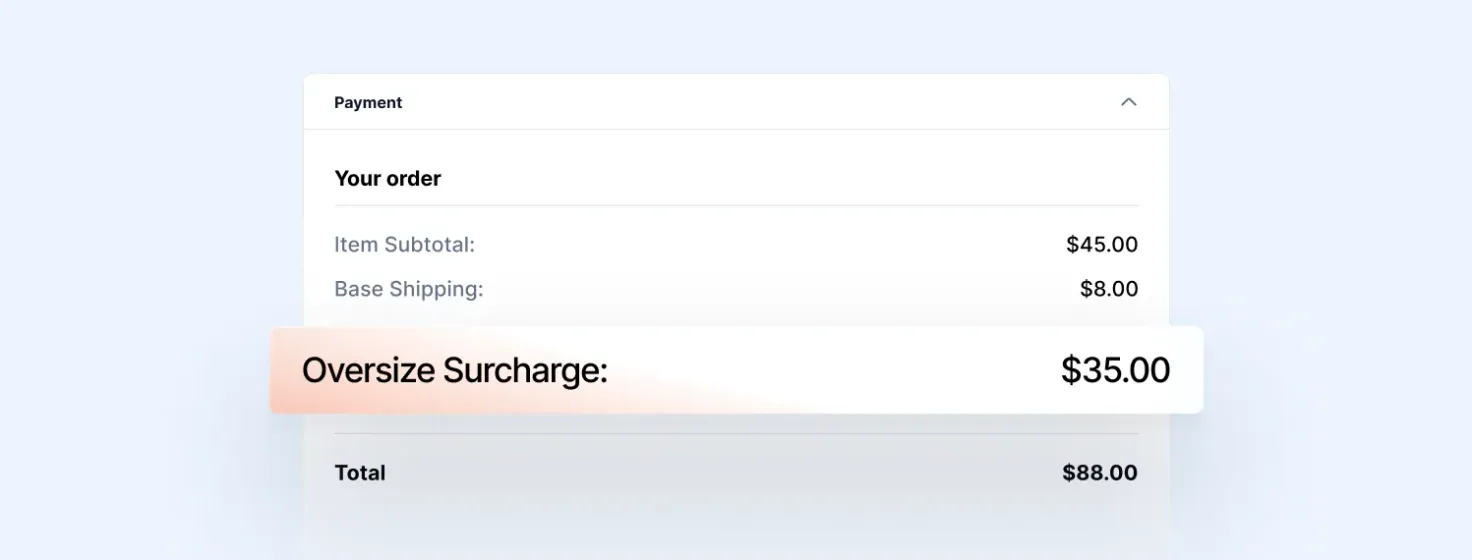
Checkout showing high oversize shipping surcharge
One specific note on remote areas: some remote zone surcharges are significantly higher than most merchants expect. In extreme cases, delivering to a remote address can cost 10 times the standard residential rate. If you have customers in those zones, you have two options:
- Negotiate a remote area surcharge cap in your carrier contract
- Implement a remote area surcharge pass-through at checkout - customers in known remote zones are informed and charged an additional fee. Most customers in remote locations are already aware of this reality and will either accept the charge or provide an alternative address
If you are not accounting for remote area surcharges in your pricing model, every order to those zones is likely a loss. Check your carrier contract for the zones that trigger the surcharge and model the actual cost per order for those destinations.
Audit Every Invoice - Carriers Make Mistakes
This is one of the most actionable items in this entire guide, and one of the most consistently overlooked.
Carrier invoices are not always correct. In fact, industry data suggests nearly 80% of carrier invoices contain some form of discrepancy or error. These include:
- Dimensional weight calculated incorrectly by the carrier’s own scanning system
- Duplicate charges for the same shipment
- Surcharges applied to addresses that do not qualify for them
- Rates that do not match your contracted terms
- Delivery guarantee failures that should trigger a refund or credit
Your label says 1kg. The carrier’s system scanned it and billed it at 8kg. Without an audit, you pay the higher amount and have no idea it happened. Multiply that by hundreds of shipments over a year and you have a significant, entirely recoverable loss.
Nearly 80% of carrier invoices contain discrepancies. Carriers do not automatically correct these. Unless you identify and dispute them, you pay for them.
What to do:
- Set a recurring monthly review of your carrier invoices - even a manual spot-check of 20-30 shipments can catch patterns
- Focus on your heaviest and most expensive shipments first - those are where billing errors have the most impact
- Look for anomalies: shipments where the billed weight is significantly higher than your recorded shipping weight
- For higher volumes, consider parcel audit software - automated tools review every invoice line and typically recover 5-20% of shipping spend annually
- All major carriers have a dispute and refund process - errors can be corrected and overcharges reclaimed if you submit within the claim window
Use Carrier-Provided Packaging When It Makes Sense
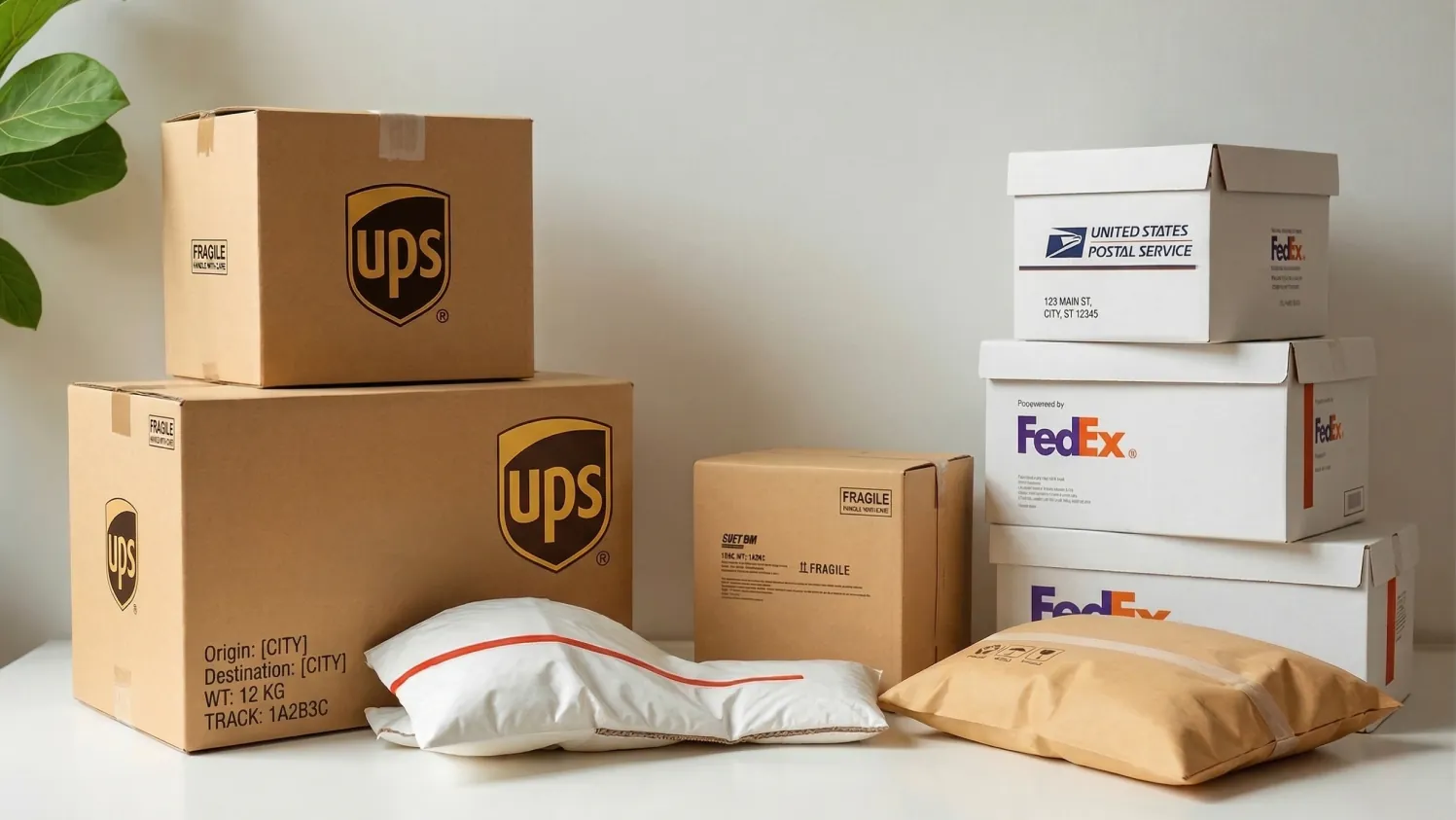
Stacked shipping packages from multiple carriers
FedEx, DHL, and other major carriers provide their own packaging - envelopes, boxes, tubes, and polybags - free of charge for certain service types. Most merchants do not fully use this, and the savings are larger than they first appear.
The obvious benefit is eliminating the cost of packaging materials. But there are two additional benefits that are less commonly known.
First, carriers often offer better base rates on shipments sent in their own packaging. FedEx, for example, has service tiers that are priced more favorably when you use FedEx-supplied packaging. This means using their box is not just free - it can also reduce your per-shipment rate.
Second, carrier-provided packaging is measured and classified by the carrier’s own system, often using more merchant-friendly DIM calculations for those service types. When you ship in a carrier’s standard box, the dimensional weight is frequently already accounted for in the service pricing rather than calculated as a variable surcharge on top.
Consider the full picture when evaluating carrier rates:
- Your current packaging material cost per order
- Design, sourcing, and procurement overhead for custom or own-brand packaging
- Inventory storage space for multiple box sizes
- The rate difference when using carrier packaging versus your own
- The DIM weight treatment differences between carrier packaging and your own boxes
A carrier whose base rate is $0.30 higher per shipment but who provides free packaging, offers a better rate for using it, and applies a more favorable DIM calculation may easily be cheaper in total than one with a lower headline rate. Run the full calculation before deciding.
If you sell thousands of orders per month, the packaging material saving compounds quickly. It also simplifies operations - fewer box sizes to stock, fewer suppliers to manage, and less warehouse space tied up in packaging inventory.
Part 3: Shipping Platforms, Mail Injection, and 3PL
Beyond packaging and carrier contracts, there are structural options that can fundamentally change your cost base - particularly as volume grows.
Use a Shipping Broker Platform If You Are Not at Scale Yet
One of the most common mistakes smaller eCommerce stores make is attempting to negotiate carrier contracts directly before they have enough volume to get a good deal. At low volumes, a direct carrier contract often has worse rates than what a shipping broker platform can offer.
Shipping broker and aggregator platforms pool the volume of thousands of merchants to negotiate pre-arranged discounts that individual merchants cannot access alone. They also provide:
- Access to multiple carriers from a single dashboard
- Pre-negotiated rates that beat most direct small-merchant contracts
- Automated label generation and tracking
- Easy rate comparison across carriers per shipment
- Simplified invoicing and reconciliation
Well-known platforms in this space include Sendcloud, ShipStation, Easyship, Packlink, and Swotzy. Each has different carrier coverage, regional strengths, and fee structures - but all provide access to rates and carrier combinations that most small merchants cannot access independently.
As volume grows, there typically comes a point where going direct to a carrier yields better rates than using a broker - because the broker is also taking a margin. That threshold varies, but merchants shipping several hundred to a few thousand orders a month often start exploring direct contracts.
There is also an operational consideration: managing a shipping strategy - tracking performance, auditing invoices, comparing rates, handling disputes - requires someone’s time. For smaller operations, using a broker platform means one relationship, one system, and less operational overhead. That time cost is real and should be part of the calculation.
Recommendation: Start with a broker platform. It is faster, simpler, and often cheaper at low volumes. Re-evaluate direct contracts once you are shipping consistently at meaningful volume and have someone able to manage carrier relationships properly.
Mail Injection for International Volume
Mail injection - sometimes called international parcel consolidation - is a technique that most small merchants have never heard of, but that can dramatically reduce international shipping costs for stores shipping meaningful volumes to specific markets.
Here is how it works: instead of shipping each international order individually via a standard carrier, you consolidate all orders going to a particular country into a single bulk shipment. That bulk shipment travels to the destination country as freight, dramatically cheaper than individual parcel rates. Upon arrival, the local postal service or a local last-mile carrier handles final delivery to each individual address.
The table below shows how the options compare for 100 orders shipping from the US to the UK:
| Scenario | Cost Per Order | Total for 100 Orders | Delivery Time |
|---|---|---|---|
| Local post only (e.g. USPS to Royal Mail) | $7.00 | $700 | 10-14 business days |
| Express courier direct (e.g. FedEx International) | $10.00 | $1,000 | 2-3 business days |
| Mail injection: bulk air + UK local post | $4.50 | $450 | 5-8 business days |
| Mail injection: bulk air + UK local express | $5.50 | $550 | 3-5 business days |
The pattern here is clear. Local post is cheap but slow at 10-14 business days - a delivery window that will hurt conversion and customer trust for most product categories. Express courier is fast, but at $10 per order, it is the most expensive option. Mail injection sits in the middle: faster than local post, and significantly cheaper than express.
The mail injection plus local express option is particularly interesting. At $5.50 per order, it delivers in 3-5 business days - comparable to what many customers consider a reasonable standard delivery window - at roughly half the cost of sending each order via express individually.
This makes mail injection a strong option for stores offering free shipping internationally. You absorb a slightly longer delivery window compared to express, you consolidate orders before sending rather than shipping each one immediately, but you still deliver within a timeframe customers find acceptable - and you do it at a cost that is sustainable. Some merchants use this as their primary international shipping strategy, not just a cost-saving workaround.
Mail injection works best when you have consistent volume to a specific market. The consolidation model requires batching orders - typically weekly or bi-weekly - before sending. If your volumes to a given country are low or irregular, the savings may not justify the process overhead.
Mail injection works best when:
- You have consistent, meaningful volume to a specific country or region - typically 50+ orders per shipment cycle to make consolidation worthwhile
- You can accept a slightly longer delivery window than an express individual shipment
- The destination country has a reliable local postal or last-mile network for final delivery
Services that offer mail injection consolidation include Spring GDS, DHL eCommerce, and various regional consolidators. The economics vary significantly by destination, volume, and service level - it is worth modeling your specific international lanes before committing.
3PL: Outsourcing Fulfillment Often Costs Less Than Running It In-House
Third-party logistics (3PL) providers are companies that handle warehousing, pick and pack, and shipping on your behalf. Many merchants assume that outsourcing fulfillment must be more expensive than running it in-house - after all, the 3PL needs to make a margin too.
In practice, the opposite is often true.

3PL fulfillment flow from manufacturer to customer
A 3PL that handles thousands of orders a day has a fundamentally different cost structure than a merchant handling hundreds. They negotiate carrier rates at a volume that individual merchants cannot reach. Their warehouse operations are more efficient. Their technology infrastructure is amortized across many clients. Their error rates are typically lower.
The real comparison is not 3PL fees versus your current shipping costs. It is 3PL total costs versus the true all-in cost of your own fulfillment operation - including warehouse rent, staff, packaging procurement, shipping rates, error handling, and management time.
Benefits that regularly make 3PL more cost-effective than in-house fulfillment:
- Access to carrier rates that are significantly below what you can negotiate directly at your volume
- No warehouse overhead - rent, utilities, equipment, and insurance are shared across many clients
- Labor flexibility - you do not pay for spare capacity during slow periods
- Reduced shipping zones - many 3PLs have multiple fulfillment centers, meaning fewer orders travel cross-country, and zone costs decrease
- Lower error rates - professional fulfillment operations typically have better pick accuracy than in-house teams at early stages
- Operational focus - freeing internal resources from daily fulfillment management to spend on growth
For growing eCommerce stores, outsourcing fulfillment is worth modeling seriously. The decision is rarely as simple as comparing line-item costs - the operational complexity, capital tied up in warehouse infrastructure, and time cost of managing fulfillment in-house all belong in the calculation. Companies like Rocketshippers, for example, specialize in helping merchants compare in-house versus 3PL economics with their actual data - including carrier rates, pick and pack costs, and warehouse overhead - so the comparison is based on real numbers rather than assumptions.
Part 4: Additional Optimization Levers
Beyond the main categories above, there are several further tactics that sophisticated shippers use to reduce costs incrementally. Each one is smaller in isolation, but together they add up.
Zone Skipping
Shipping zones are how carriers calculate distance-based pricing. An order shipping from New York to California crosses many zones and costs significantly more than one shipping to New Jersey. Zone skipping is the practice of moving inventory closer to your customers - either through a second warehouse, a 3PL with multiple fulfillment centers, or a distributed inventory strategy.
If a significant share of your orders are going to regions far from your fulfillment location, zone skipping can reduce average shipping cost per order by 20-40%. The offset is the inventory management complexity and carrying cost at multiple locations. Model this carefully before committing.
Address Validation at Checkout
Address correction fees - charged when a carrier has to amend a delivery address after a label is printed - are entirely avoidable. Implementing address validation at checkout catches errors before they cost you money.
Most eCommerce platforms have address validation apps or built-in features. At scale, these pay for themselves quickly through avoided correction fees.
Return Shipping Cost Management
Returns are a hidden shipping cost that compounds significantly at scale. The average eCommerce return rate reached 16.9% in 2024, with projections suggesting it will reach 19.3% in 2025. Processing a single return costs 20-65% of the product’s original price when all costs are included, and return shipping alone averages $8-12 per item.
This is not an area where you can simply stop offering returns - it is a customer expectation that affects conversion. But you can manage the cost:
- Use prepaid return labels only when necessary - for exchanges or clear product errors - rather than as a blanket policy
- Offer in-store returns if you have physical locations - this eliminates the shipping cost entirely
- Negotiate return shipment rates with your carrier as part of your contract - these are often treated as a separate line item and can be improved
- Reduce return rates through better product descriptions, size guides, and photography - fewer returns means lower return shipping costs
Shipment Consolidation and Order Batching
If your operation ships multiple times a day, consolidating into fewer, larger pickup batches can reduce per-shipment costs and improve your carrier relationship. Many carriers offer better rates or priority handling for merchants who provide consistent, predictable volume in structured batches rather than scattered individual pickups.
Sustainability Packaging
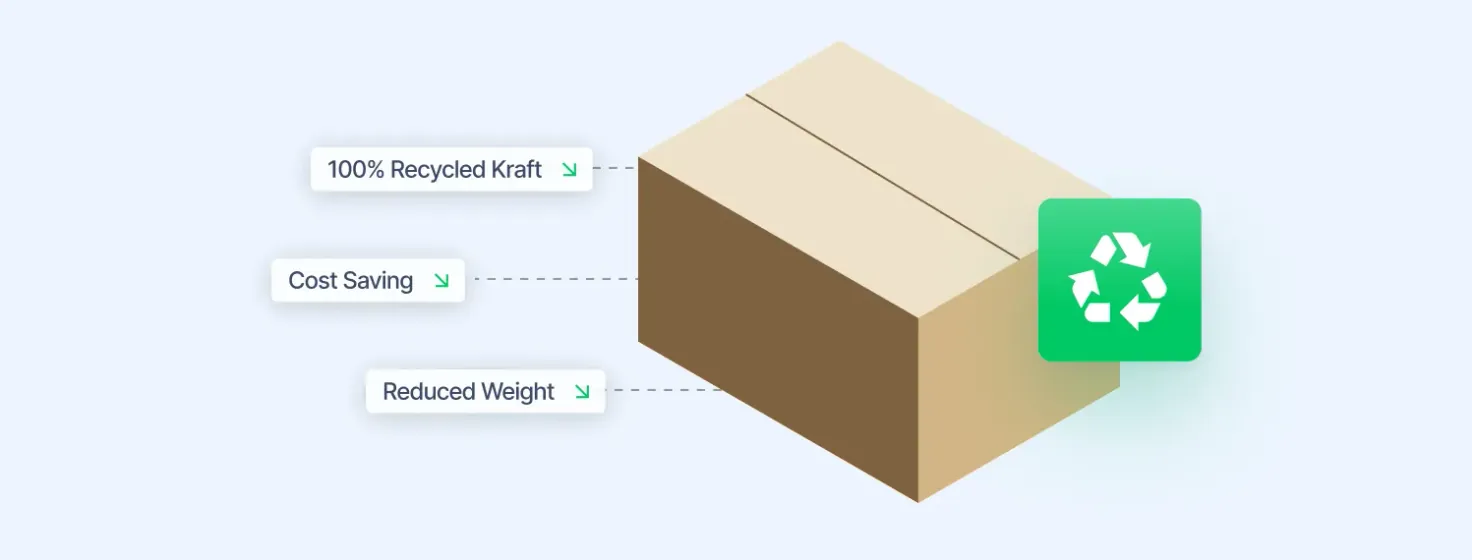
Recycled packaging
Sustainable packaging - lighter materials, recycled content, reduced void fill - is often also more cost-effective packaging. Lighter materials reduce actual weight. More compact structures reduce dimensional weight. The alignment between sustainability goals and cost goals is stronger than most merchants expect.
Carrier Performance Reviews
Beyond cost, carrier performance directly affects your return and reorder rates. Each late delivery correlates with a 1.1% increase in returns. Unexpected early delivery correlates with a 1.2% increase in returns. Each bad delivery experience reduces the likelihood of a repeat purchase.
Schedule a formal carrier performance review quarterly. Bring data: on-time rate, damage rate, tracking accuracy, and customer complaint volume related to delivery. Use that data in contract negotiations. Carriers respond to evidence of underperformance when it is documented and presented professionally.
Where to Start
Not every tactic in this article applies to every store, and trying to implement everything at once is not realistic. A more effective approach is to work through the areas in order of impact for your specific situation.
| Area | Effort | Typical Saving | Start With |
|---|---|---|---|
| Invoice auditing | Low | 5-20% of shipping spend | Pull last month’s invoices and spot-check weight and surcharges |
| Dimensional weight optimization | Medium | 10-30% on affected SKUs | Audit your 10 most-shipped products for DIM weight vs. actual weight |
| Carrier contract renegotiation | Medium | 5-15% base rate reduction | Request a formal review meeting with your current carrier |
| Adding a second carrier | Medium | Variable by route | Get a comparative quote from one alternative carrier this month |
| Shipping broker platform | Low | Variable (strong for low volume) | Sign up for a platform trial and compare rates on 20 recent shipments |
| Surcharge audit | Low | Variable, often significant | Map every surcharge on your last invoice against your contract terms |
| Packaging standardization | Medium | 5-15% on DIM weight | Reduce to 3-5 standard box sizes aligned with carrier thresholds |
| Mail injection | High | 30-60% on eligible lanes | Model cost for your top 2-3 international markets by order volume |
| 3PL evaluation | High | Potentially significant overall | Run a full cost comparison, including all in-house overhead vs. 3PL fees |
| Zone skipping | High | 20-40% on long-zone orders | Analyze the geographic distribution of your orders and zone costs |
Shipping costs are not a fixed line item. They are the result of dozens of decisions - about packaging, carriers, contracts, processes, and structure. Every one of those decisions is changeable. The merchants who treat shipping as something to be actively optimized, rather than passively accepted, find meaningful savings every time they look.
Want a step-by-step checklist for auditing your shipping costs?
We put together a practical checklist that walks through each of the areas covered in this guide - with specific actions, things to check, and metrics to track.
Access the shipping cost optimization checklist here.