

There is no challenge for which they can't find a solution.

Will Aubuchon
CEO
Adobe's versionless SaaS edition. No more upgrades, and no more PHP inside the application. Most merchants asking about it don't need to move yet.

Adobe Commerce gold partner
#1 Adobe Commerce partner worldwide

Hyvä Platinum Partner
40+ projects delivered


ISO certification
9001 & 27001

Most certified Hyvä agency worldwide
200+ Adobe Commerce Certifications

Adobe Subject
Matter Expert












The debate is usually framed as stay on PaaS or move to SaaS. There's a middle option that suits more merchants than either, and it gets mentioned least.
Adobe has restated its commitment to PaaS. Six patch releases and one minor release a year, on your schedule.
A SaaS catalog, search and Edge Delivery layer in front of your backend. No replatform, no data migration.
The full SaaS edition. Adobe owns and updates the application, and customisation moves out of process.

One caveat on the middle path
The Optimizer connector is B2C-oriented today. On Adobe Commerce B2B, check that route against your setup first.
Feature lists describe what's available. These are the five operational changes people are unprepared for.
Multi-tenant and versionless, so the release schedule isn't yours. What you no longer have is the option to defer.
An App Builder app reacting to events and calling back over APIs, instead of a PHP module. Different skills, debugging and deployment.
Events and webhooks come from a list Adobe maintains and extends release by release. If the hook you need isn't on it, it isn't there yet.
Headless, with merchandising data behind GraphQL. Content teams gain independence, developers lose the theme.
Recreated by hand in the new admin. For one store view that's an afternoon. For thirty across six countries it's a workstream.
The question almost nobody asks: can your team verify the store every time Adobe ships?
Automated coverage across checkout, payments, B2B flows, integrations and your App Builder apps, runnable in days.
Coverage is thin, and manual QA sufficed because releases were rare and scheduled.
A monthly evaluation cadence with manual testing is how a no-more-upgrades promise turns into permanent overhead.
30 days
to evaluate each release in a sandbox. Only worth something if you can actually verify your store in it.
A quieter change with real operational consequences. Adobe's own SaaS-versus-PaaS comparison spells it out.
Transaction traces, slow queries and background jobs. The profiling that tells you which plugin costs 340ms on every category render.
A New Relic licence is not included. Observability shifts to OpenTelemetry for your App Builder apps and real-user dashboards for the storefront.
Sizing, scaling and platform incidents stop being yours to diagnose at all.
The engine isn't yours to profile. You debug with what Adobe exposes.
Your New Relic sees API Mesh and App Builder, not the application.

If your team diagnoses performance by reading traces, that muscle needs rebuilding around a different toolset. A planning item rather than a surprise.
Three things get conflated, and the difference decides whether your storefront survives.
Lichtkoning's Hyvä storefront passes Core Web Vitals on mobile. That's the path that survives on PaaS, not the one that moves to ACCS.

Renders server-side inside the Magento application. Fast, mature, with 1,000+ compatible extensions.
 Survives on PaaS

EDS publishes content through AEM, Hyvä renders commerce pages. Shared styling and a shared cart.
 Requires AEM

Adobe's own headless EDS storefront, built from Adobe-maintained components over GraphQL.
 No theme, no application

So "Hyvä works with Edge Delivery Services" is true, and "Hyvä works on ACCS" is not. If someone tells you your Hyvä storefront carries across, ask which of the three they mean.
Four arguments we hear regularly that don't survive checking.
The claim
What we hear
What's actually true
Once you check

Each row is the claim → what's actually true
The claimAdobe is forcing us
What's actually trueNo. What has a deadline is your version, not Cloud.
The claimWe need to be ready for agentic commerce
What's actually trueAgentic support is coming to Cloud and ACCS alike.
The claimIt'll be cheaper
What's actually trueRarely. Moving can cost more than years of upgrades.
The claimOur catalog is big, so SaaS will scale better
What's actually trueCheck the ingestion limit before the performance one.
The one that holds up
That's an argument about how your team spends its week, and it survives checking.
Adobe has published no end date for Adobe Commerce on Cloud. Individual versions do have one, and from 1 June 2027 Adobe stops maintaining Cloud environments running unsupported versions.
2.4.4
1 Jun 2027
Apr 2025
Apr 2026
2.4.5
1 Jun 2027
Aug 2025
Aug 2026
2.4.6
1 Jun 2028
Aug 2026
Aug 2027
2.4.7
1 Jun 2028
May 2027
May 2028
2.4.8
TBD
May 2028
TBD
2.4.9
TBD
May 2029
TBD
Your question is an upgrade, not a replatform. Get supported, then decide about SaaS.
You have until 2028 before enforcement. Enough runway to prepare, not choose under pressure.
Almost everything expensive about an ACCS migration is expensive because customisation lives inside the application. That's fixable gradually, on your current platform.
Each of these is worth doing on Adobe Commerce on Cloud on its own merits. Together they turn a future migration from a rebuild into a move.

New work goes into App Builder, not PHP. It runs on PaaS today and survives a move.

ERP, PIM and 3PL as event-driven integrations. Better isolation now, portable later.

Every extension removed is one fewer verdict to make later, and most stacks carry several nobody would miss.

It cuts release risk on your current platform now, and SaaS needs it later.

If speed and merchandising agility are the real drivers, the storefront can modernise without touching the backend.
The expensive part of an ACCS migration is rebuilding in-application PHP as out-of-process App Builder applications. Adobe shipped tooling for exactly that.
Rebuild work can start during the decision phase, on the modules you already know you're keeping, rather than waiting for a signed migration plan.

Connects AI coding assistants to Commerce docs, APIs and App Builder patterns, right in the IDE.

Pre-built skills for REST APIs, checkout extensions, storefront components and events on ACCS.

Each module carries a description written to be used as a prompt, so scaffolding starts early.
Agentic development under review, our own open-source Magento MCP module, four quality gates.
We build App Builder applications today, including for extension vendors, so the platform is not new to us.


Kevin Hughes
European Technical Director

There is no challenge for which they can't find a solution.
Will Aubuchon
CEO

The team has been behind every one of our successes, and I recommend them without hesitation.

Bob Toeppner
E-commerce Manager

Within just two to three months, they resolved issues that previously seemed unresolvable.

Tim Johnson
CTO

The top-ranked Adobe Commerce agency on the planet by Adobe themselves.





The most certified Hyvä agency in the world. Confirmed by Hyvä themselves, twice.
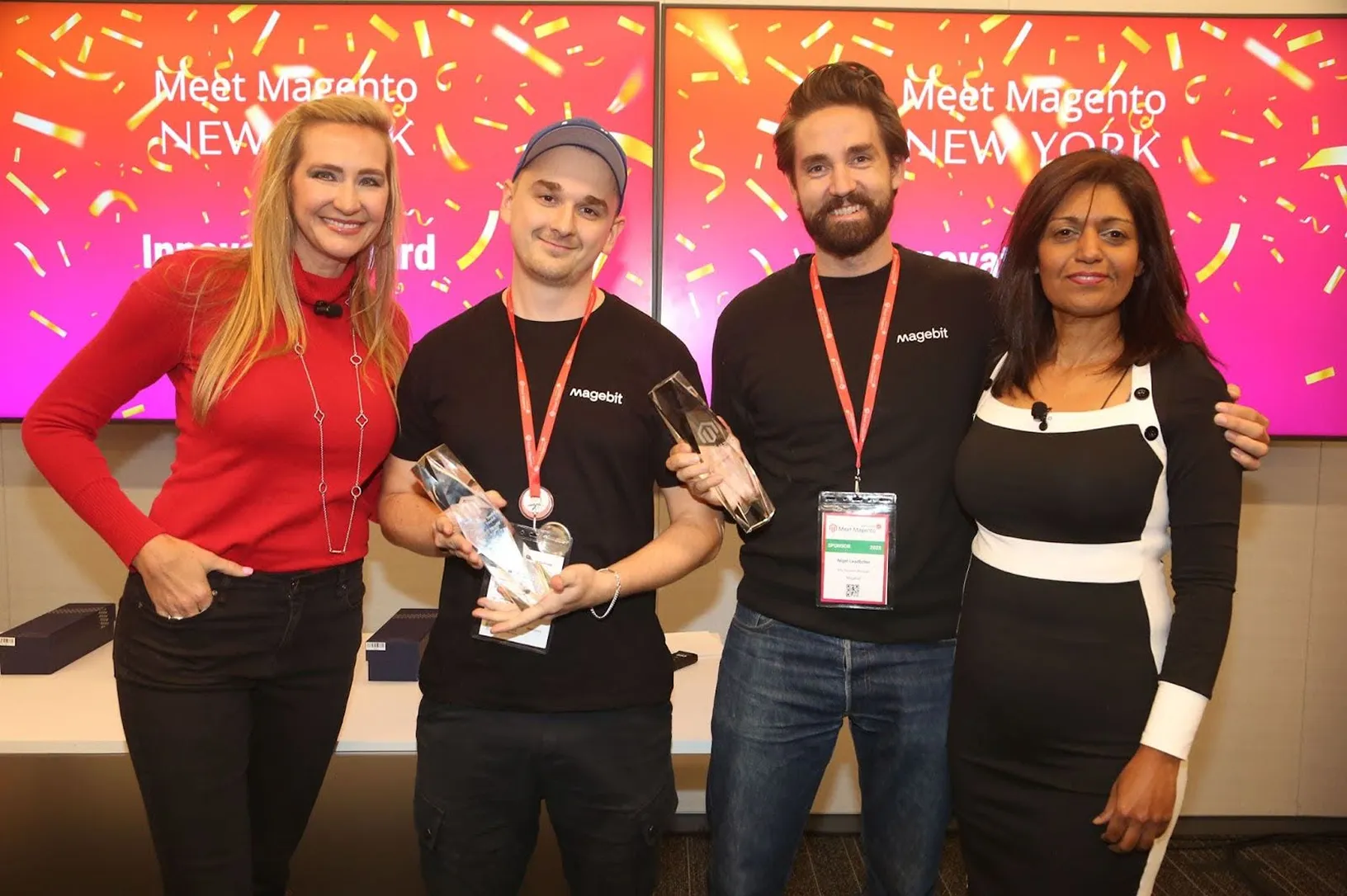
Innovator, World Traveler, and eCommerce Excellence awards across Meet Magento NYC and HIVE London, and more.

The most-certified Hyvä agency worldwide and the first Hyvä Platinum Partner in the USA. 55+ certified developers and 40+ projects delivered.

ISO 9001 & 27001 for quality and security.
Truly agile team that moves and adapts faster than your typical agency.

UX grounded in large-scale ecommerce research.
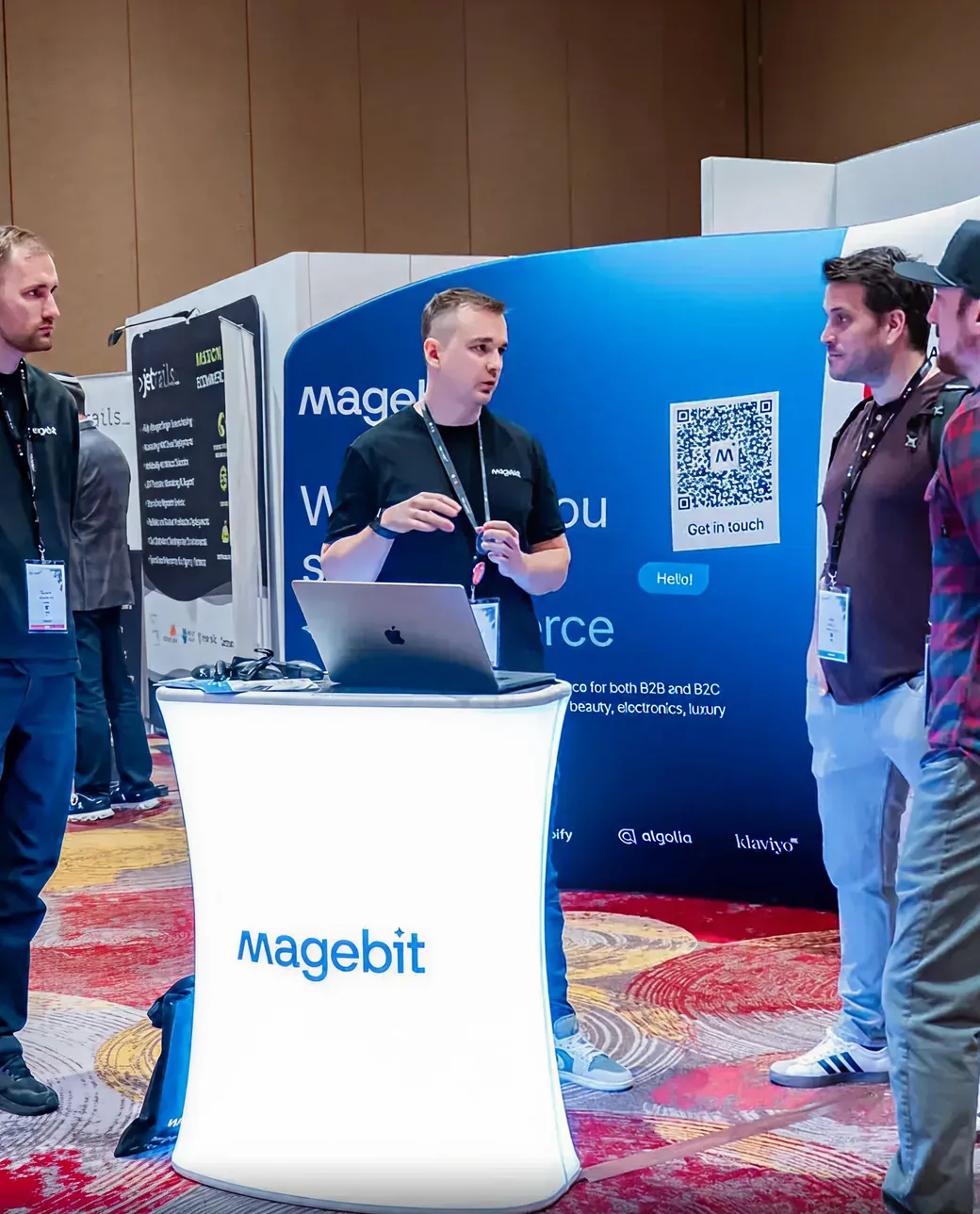
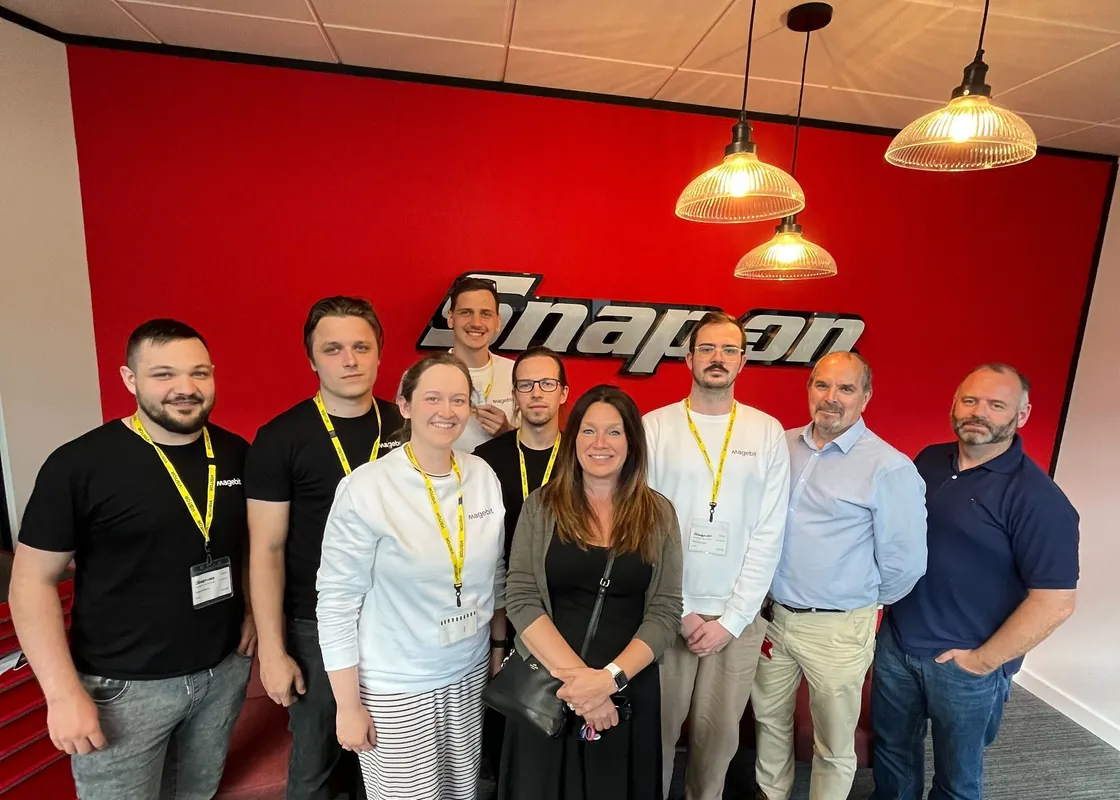
Magebit team at Meet Magento, #1 Adobe Commerce agency worldwide.
By certified developers, Magebit holds the number-one spot among Adobe Commerce agencies worldwide, and we’re the most certified Hyvä agency on the planet. Proof that the depth is real, not a logo on a page.

#1 Adobe agency worldwide
200+ Adobe certifications
Most certified Hyvä agency
Adobe Subject Matter Expert
Most merchants asking about ACCS are really asking whether they're behind. Almost none of them are. Tell me your version, your SKU count and what your storefront cost, and I'll tell you which of the three paths fits, and what to do first either way.
Reviewed by Kristaps Rjabovs
Co-founder of Magebit, Forbes 30 Under 30

If you can't find the answer you're looking for, feel free to reach out to us. We're here to help.
Adobe's multi-tenant, versionless SaaS edition of Adobe Commerce, generally available since June 2025. Adobe owns and hosts the application and updates it continuously, so nobody plans a version upgrade again. In exchange, PHP doesn't run inside the application, customisation happens out of process through App Builder, and the storefront is a separate build on Edge Delivery Services.
No. Adobe has publicly restated its commitment to the PaaS edition, with continued security and quality updates and new features on the published schedule. What carries a deadline is your version: from 1 June 2027 Adobe stops maintaining Cloud environments running unsupported versions.
A SaaS catalog, search, merchandising and Edge Delivery storefront layer that sits in front of your existing backend, with no replatform and no data migration. For merchants whose real drivers are storefront speed and merchandising agility, it's frequently the better-value answer. Worth checking against your setup if you run B2B, since the connector is currently oriented to B2C.
Not directly. No PHP runs inside the application, so in-application modules have no home. Some vendors have rebuilt extensions as App Builder applications, but that catalog is still small, so most stacks need individual verdicts and some capabilities get rebuilt or dropped.
Not on ACCS. Hyvä Edge does integrate Hyvä with Edge Delivery Services, but per Hyvä's documentation it requires Adobe Commerce and AEM, with EDS handling content pages while Hyvä renders commerce pages inside the application. ACCS has no application for that theme. If your Hyvä build is recent, weigh the write-off against the current support window.
In practice, yes. Updates arrive on Adobe's schedule with a 30-day sandbox window, and that window only helps if you can verify your store inside it repeatedly. Most Adobe Commerce merchants have thin coverage because releases used to be scheduled and rare. Building that suite belongs in the migration scope.
It changes hands. Adobe manages the platform and a New Relic licence isn't included, so observability moves to OpenTelemetry for your App Builder apps and real-user dashboards for the storefront. You can send API Mesh and App Builder data to your own account, but the application isn't yours to profile.
Yes, before anything else. It's an automated scan of your codebase that Adobe runs, needing no production access beyond sharing the code, and it returns a complexity score, a separate storefront score, and a rebuild-refactor-replace-remove verdict on every custom module. Request it through your solution account manager. It sizes the work; we then price it and run the module retirement pass that makes it smaller.
Not reliably, and cost is the weakest reason to move. The subscription consolidates platform, hosting and upgrade spend, but for a customised build the one-time cost of getting there commonly exceeds several years of upgrade spend.
Explore the Magento services Magebit has to offer.
Your version, your SKU count, your extension stack and what your storefront cost. The assessment compares staying, adding Optimizer and moving to ACCS over three years, in numbers.
Not a sales script.
With the assumptions visible.
The assessment is yours to keep.
We use cookies.
Some help us see how the site is used and measure our ads. You choose — until you do, no cookies are set and Google receives only cookieless signals that don't identify you. Privacy Policy